

Anurag Kashyap came to Bombay with no connections, no film school pedigree, and a zoology degree from Varanasi. That last detail matters more than people give it credit for. It explains something about how he sees and understands how organisms adapt, survive, prey on each other. His films have that quality. They’re ecological, almost. Nobody wins cleanly. Everyone’s implicated.
Starting out, he established himself as a screenwriter working with directors like Hansal Mehta and Ram Gopal Varma, learning the machinery of Bollywood from the inside while never quite belonging to it. His first films as a director ran straight into the censors. Paanch was shelved indefinitely. Black Friday was held back for years over legal wrangling. The industry treated him like a problem to be managed.
Then Dev D, then Gulaal, then the two-part, five-hour Gangs of Wasseypur in 2012, and suddenly Cannes was paying attention. A filmmaker who couldn’t get his debut released was now one of the most talked-about voices in world cinema. That arc doesn’t happen often.
I’ll be direct about something, though. I’ve sat through enough of his films to feel the repetition. The grime, the nihilism, the baroque violence. It can tip into self-indulgence, and on a few occasions it has. A director this prolific, this restless, is going to misfire. Kashyap misfires.
But what fascinates me about him is his genuine, unbridled support for regional and independent cinema. Quickly then, here’s my ranking of every Anurag Kashyap film to date.
Recommended: 10 Most Disturbing Hindi Films
13. Return of Hanuman (2007)
After three films that critics noticed and audiences largely ignored, Kashyap did something nobody saw coming. A children’s animation, which clearly wasn’t a rational career move. But there’s something characteristically stubborn about it that I find hard not to respect.
Return of Hanuman drops the monkey god into contemporary India, and the premise alone carries a kind of anarchic energy that feels unmistakably Kashyap. It’s saucy, it’s irreverent, it borrows liberally from the Bollywood potboiler playbook while quietly mocking it. There are genuine flashes of wit here. The film works best when it leans into its own absurdity rather than explaining itself.
Where it stumbles is the narrative – impulsive, loosely assembled, clearly made by someone whose instinct is to keep moving rather than stop and consolidate. For a children’s film, that restlessness is both its charm and its problem. Kids forgive a lot. Adults sitting alongside them will feel the seams.
Still. As a curio in his filmography, it’s more interesting than its reputation suggests.
12. Bombay Velvet (2015)
Bombay Velvet tells you exactly what happens when you take a filmmaker whose power comes from spontaneity and pressure-cook him inside a massive studio budget, a period setting, and the weight of expectation.
The film is gorgeous to look at. Kashyap and his team render 1960s Bombay with real conviction. The jazz clubs, the smoke, the prohibition-era American noir references worn openly on the sleeve. Ranbir Kapoor and Anushka Sharma are not the problem. Nobody here is the problem in any obvious way.
Yet the film feels oddly inert. Technically accomplished and emotionally hollow. The source, historian Gyan Prakash’s Mumbai Fables, is rich material, but somewhere between the research and the screen, the blood drained out of it. Kashyap’s singular quality has always been a kind of barely-contained disorder, the sense that his films are alive and slightly out of control. Bombay Velvet is the opposite: controlled, polished, and strangely lifeless.
11. Paanch (2003)
Five rock band members, chemically dependent and morally unmoored, stumble into a kidnapping that predictably, inevitably, goes wrong in every direction. The plot is almost beside the point. What Kashyap is really doing here is establishing atmosphere, grimy, tactile, aggressively un-Bollywood, and testing how far he can push it.
Kay Kay Menon is the reason to watch. His hot-headed, casually malevolent performance has a live-wire unpredictability that keeps you genuinely unsettled.
The censors, clearly, had problems. The drug use, the language, the general lack of remorse. Paanch never saw a domestic theatrical release, becoming instead a film cinephiles passed around on pirated sites, which in retrospect only added to its mythology. There are real narrative problems here that Kashyap would iron out over the next decade. But the visceral energy, the refusal to clean anything up, that’s already fully formed.
10. No Smoking (2007)
No Smoking is a rare abstract, surrealistic drama. Although labeled as Lynchian and Kafkaesque, the film nowhere comes close to the profundity rendered by those legendary figures. Kashyap’s work merely offers surface pleasures and an attention-grabbing hallucinatory imagery. Yet, the experimental spirit keeps the twisted journey fulfilling to a point. John Abraham plays the protagonist K, a chain-smoker haunted by recurring nightmares. On his wife Anjali and best friend’s insistence, K takes up a Guru’s services to get rid of the habit. The narrative then freewheels into increasingly bizarre territories.
This is his most polarising film, and the one that gets misread most often in both directions.
No Smoking follows K, played by John Abraham, cast deliberately against type, a chain-smoker whose wife and best friend finally strong-arm him into visiting a mysterious guru who promises to cure the habit. What follows is a hallucinatory unravelling that owes obvious debts to Lynch and Kafka, debts Kashyap doesn’t try to hide.
I’ll say what most Indian critics were too polite to say clearly at the time: the Lynchian and Kafkaesque comparisons are flattering but don’t really hold. Lynch’s surrealism is rooted in a deeply personal unconscious. It’s disturbing because it feels dredged from somewhere real. Kashyap’s version is more referential, more assembled. The imagery is genuinely arresting in places, but you can feel the influences sitting on the surface rather than metabolised into something new.
And yet. The experimental ambition alone deserves some respect in the context of Indian commercial cinema, where this kind of film simply doesn’t get made. Abraham is better than his reputation suggests here. And the film has a hallucinatory momentum that, if you surrender to it, delivers a certain twisted satisfaction.
Not a success, exactly. But a worthwhile failure, which in Kashyap’s filmography counts for something.
9. Manmarziyan (2018)
If you’re looking for novelty, Manmarziyan is the wrong place. The story is old wine. Manmarziyan is a character-driven tale, of love, trust, betrayal. The age-old premise wrapped in a modern-day packaging centres around passionate, carefree lovers—fierce and fiery Rumi, and the reckless, committment-phobic Vicky—both fearless in the face of consequences.
What happens when a sorted, mature, ‘husband-material’ Robbie walks into this love story? The film doesn’t make him a villain or a fool, which is the obvious trap and the one Kashyap sidesteps. That moral generosity is what raises Manmarziyan above its genre trappings.
Taapsee Pannu is the engine here. Abhishek Bachchan, criminally underused by Bollywood for the better part of a decade at that point, reminds you yet again what he’s capable of. Vicky Kaushal does the combustible, self-destructive male routine and does it well, though the role has less interior life than the other two.
8. That Girl in Yellow Boots (2010)
This one matters to me for reasons that have little to do with whether it entirely works. And it doesn’t, not fully.
A British woman of mixed heritage arrives in India searching for a father she knows almost nothing about. The world she moves through is the underbelly of a grimy metropolis. Kashyap and Kalki Koechlin wrote it together, and you can feel the personal investment in every frame. This is not a film made from a comfortable distance.
The problem is the screenplay doesn’t trust its own ambiguity. A story this morally murky needs to breathe in the spaces between scenes, to resist explaining itself. This one explains itself. The dramatic beats arrive on schedule, the clichés accumulate, and what could have been genuinely unsettling becomes merely grim.
Koechlin holds it together through sheer force of performance, finding textures in Rakhee that the script doesn’t always provide.
Where to watch: Netflix
7. Mukkabaaz (2018)
Kashyap has never been subtle about his politics. Caste violence, religious fundamentalism, the rot that runs through grassroots Indian sport, it’s all here, worn openly. Shravan is a boxer from UP with real talent and zero leverage, training under a Brahmin politician-gangster whose grip on the local boxing circuit is absolute. He falls for the man’s mute niece, Sunaina, and that’s the tripwire. What follows is less a sports film than a portrait of how ordinary ambition gets crushed in India.
The boxing sequences have an unglamorous rawness to them that I appreciated. This is not Rocky or Raging Bull. Kashyap isn’t interested in depicting triumph. He’s interested in what it costs a man just to stay in the ring.
Where the film stumbles is pacing. At over two hours it overstays its welcome in the second half, and some of the political commentary lands with more force than finesse. The beef lynching thread in particular is handled with a bluntness that is timely but not always dramatically integrated.
What saves it, consistently, is Vineet Kumar Singh. He’d been working in Hindi cinema for years without a role worthy of him. This was that role. Watch the film for him.
6. Raman Raghav 2.0 (2016)
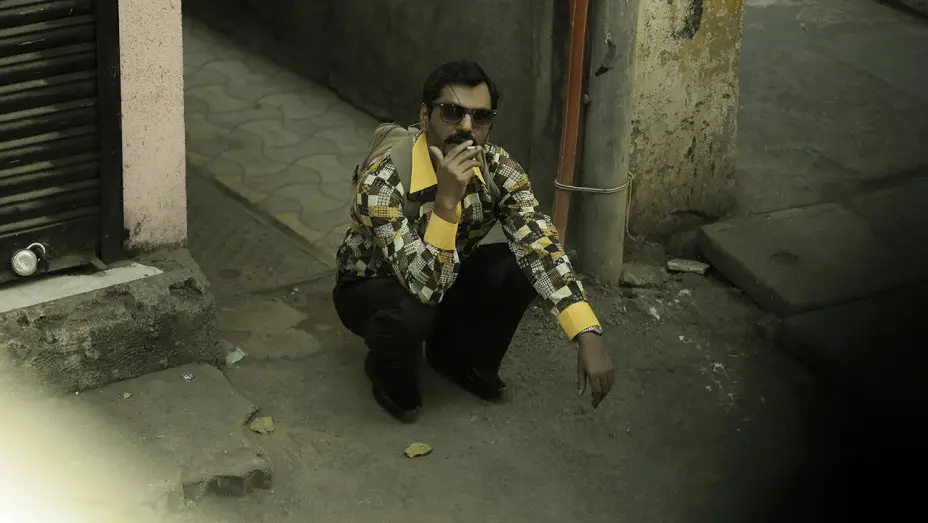
Tarantinoesque in its treatment, this is Kashyap delving deep into the subterranean of the soul. Each chapter is a cinematic delight and the sum is greater than the parts. Myriad sub-shades apart, this is a story of two lost souls swimming and kicking and killing in a cesspool trying to find each other, looking for completion, for a certain satisfaction. But on this remorseless, psychotic journey there’s no relief given, none asked.
And the down, down, downward spiral continues, like there’s no tomorrow, no heaven or hell, just an inexorable compulsion to kill.
Years later, this film will be studied for its brilliant non-judgemental treatment of the human condition of a disturbed mind. (Read the full review by Sanjay Trehan)
5. Ugly (2014)

A child goes missing in Ugly. That’s its premise. But the film has no interest in the mechanics of a kidnapping thriller. No ticking clock, no cathartic resolution, no moment where someone redeems themselves just enough for the audience to exhale. What Kashyap is actually making is a film about the adults. An aspiring actor with the moral architecture of a minor con artist, a police chief nursing a cold, private grudge, an ex-wife caught between them both. The missing child becomes a lens through which we watch three people reveal exactly who they are.
Kashyap’s control of atmosphere here is among the finest in his career. The locations—the greyness of Mumbai’s mid-range interiors, the fluorescent lighting of police stations, the dusty non-spaces where nothing good happens—are deployed with real precision. Grit, in his lesser films, can feel like aesthetic choice. Here it feels like moral weather.
And yet. There’s a point, roughly two-thirds through, where the relentless moral bankruptcy tips from devastating into numbing. Watching flawed characters hitting rock bottom works when you can feel the human cost beneath the behaviour. Ugly sometimes loses that thread, and when it does the darkness starts to feel theoretical. The haunting ending earns back some of what the middle section squanders, but not all of it.
A near-great film that stops just short of what it could have been.
4. DevD (2009)

I’ve thought about why Dev D works as well as it does, and I keep arriving at the same answer. Kashyap pulls off something genuinely difficult with this one. He takes one of Hindi literature’s most beloved archetypes, the self-destructing romantic, and refuses to let him off the hook. Not once.
Abhay Deol’s Dev is the son of a Chandigarh tycoon, returned from London with his sense of entitlement fully intact. He loves Paro the way certain men love: possessively, selectively, with a gift for rewriting events to preserve his own image. When things collapse, he descends into a drug-and-alcohol spiral that the film renders without glamour or self-pity, which is the harder trick.
The film’s real masterstroke is Chanda. A sex worker whose story involves an MMS scandal, she enters Dev’s world and immediately becomes the more fully realised human being in the room. Her psychology is drawn with a complexity that Dev never quite earns. That imbalance is entirely intentional. Kashyap is making a point about who gets to fall apart romantically in Indian culture and who simply has to survive.
Rajeev Ravi’s cinematography finds a visual grammar for urban dissolution that feels genuinely immersive. And Amit Trivedi’s soundtrack breathes life into the film.
3. Black Friday (2004)

Based on Hussain Zaidi’s book, Anurag Kashyap’s gritty drama revolves around the infamous 1993 Bombay blasts. They left hundreds dead and thousands injured. The ruthless explosions were adjudged as retaliation for communal violence in Bombay against Muslims during December 1992 and January 1993. The narrative focuses on inspector Rakesh Maria’s police task force, formed after the bombing. Considering the highly charged subject matter, the film was banned (lifted after 20 months). While Kashyap condemns the action of the terrorists, he doesn’t present a pretty picture of the overzealous police officers. He’s critical of both sides in the unceasing Hindu-Muslim conflicts.
Kashyap and cinematographer Natarajan Subramaniam’s saturation of heavy brown and red color tones add to the film’s gritty realism. The film’s unwieldy and editorializing structure may prove exhausting for some viewers. However, it’s propulsive and potent commentary never gets diluted.
2. Gulaal (2009)
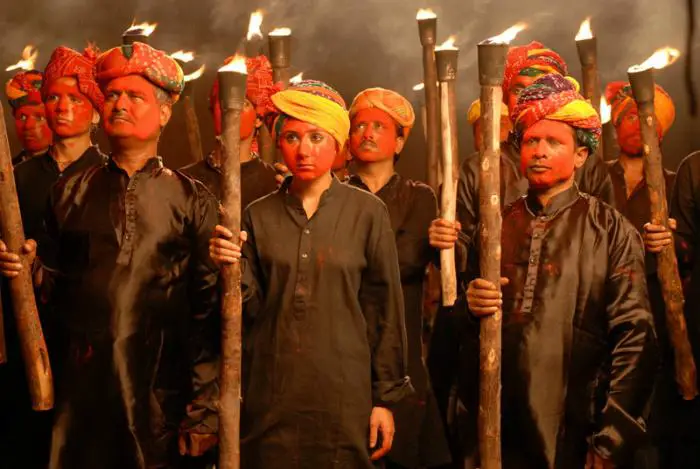
This sociopolitical drama is one of Anurag Kashyap’s angriest but less self-indulgent works. Scripted by Raj Singh Chaudhary, Gulaal is a multi-layered and multi-character film on cultural imperialists and hypocrites, who instigate violence and hatred. The story revolves around the erstwhile royal Rajputana community’s attempts to undo the injustices inflicted on them. Kashyap lays out all his pet themes — fight for power, betrayal, deception, greed — in a smart and effective manner.
Gulaal boasts of terrific performances from Kay Kay Menon and Abhimanyu Singh. Barring few forced surrealistic juxtapositions, the director’s visual flourishes are quite intriguing and profound. Piyush Mishra’s musical score perfectly gels with the narrative, leaving a lasting impact.
1. Gangs of Wasseypur (2012)
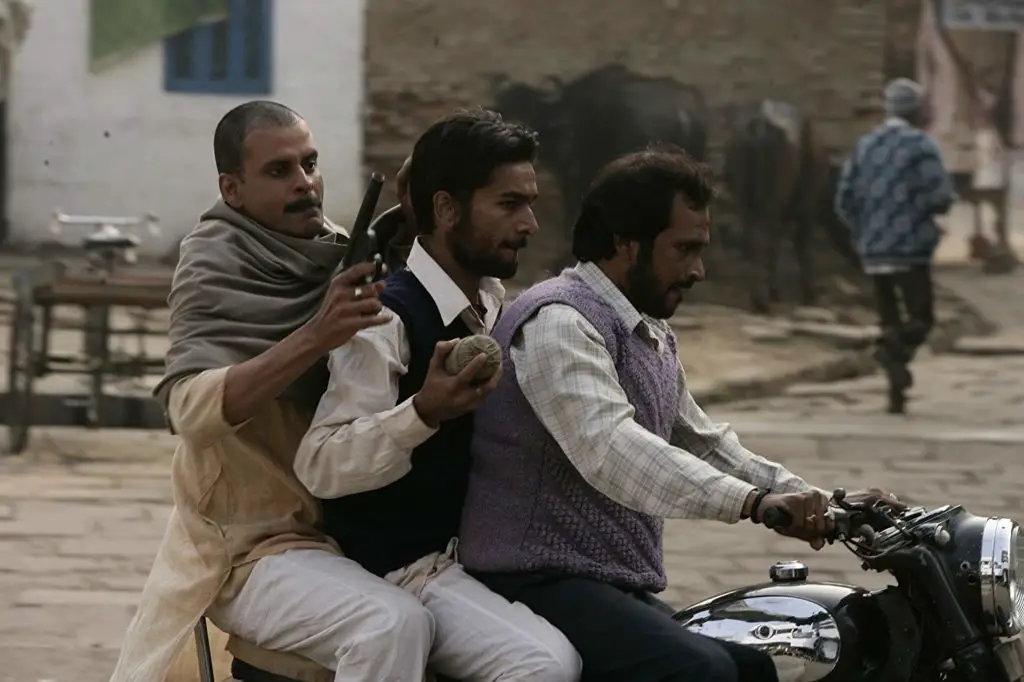
This is clearly Kashyap’s best work to-date. The story spans close to seven decades and chronicles the dominance between warring factions in the small, coal-rich town of Wasseypur. The novel-style storytelling deals with themes like political corruption, family legacy, revenge, cultural strife, etc. It all starts with a mogul Ramadhir Singh deciding to kill a notorious outlaw named Shahid Khan. Split into two segments, the first part focuses on Shahid’s son, Sardar, who vows to avenge his father’s death. In the wonderful second part Sardar’s four sons get embroiled in a conflict with the enraged Qureshi clan.
The scope and ambition with which Kashyap treats this saga of betrayal and deceit is much subtle and deeper than the usual rise-and-fall arc. His visual acuity sets stage for some of the best set-pieces. For all its stomach-churning violence, gore and profanities, the characters and dramatic scenes are effectively realized. Altogether, it’s a perfect mix of history, social commentary, and crime-genre entertainment.
Watch Gangs of Wasseypur Part 1 on Amazon Prime
Watch Gangs of Wasseypur Part 2 on Amazon Prime
Special Mention – Sacred Games (2018)

This is the most audacious attempt in any genre of Indian filmmaking. The web series is so rooted in the Indian idiom — colloquial, raw, uninhibited and overwhelming — that it rings a bell of familiar disgust and delight. The ethos it captures mirrors abuse and depravity. You begin to wonder and look for a redeeming quality. Nawazuddin Siddiqui plays the role of his lifetime and surpasses himself. Saif Ali Khan’s controlled performance seethes with unrequited intensity. This is Anurag Kashyap at his best, clearly influenced by the lyrical gore of Tarantino. And I don’t know which scenes were directed by the equally brilliant Vikramaditya Motwane, but the sum of the parts emerges as greater than the whole. (By Sanjay Trehan)
Where to watch: Netflix
There we are! Which are your favourite Anurag Kashyap movies? Tell us your top 3 in the comments below.
Have something to share with our readers? Thoughts on a film you saw recently; an obscure piece of film trivia; or a film you just finished watching and can’t seem to get out of your head? Head over to our Submit section for details and shoot us a mail at [email protected].
Follow @flicksidem and our Facebook channel for more updates!

1 thought on “Anurag Kashyap Movies Ranked From Worst To Best”
Comments are closed.