Darren Aronofsky has spent his career tunnelling into the human psyche with an intensely expressive visual language. His films often divide audiences, but few directors today render psychological realism with such clarity and force.
Born on February 12, 1969, in Brooklyn, Aronofsky gravitated toward the arts early on. After high school, he studied filmmaking at Harvard and later at the American Film Institute. He completed his first thesis film in 1990, and after AFI spent three years searching for a style that felt entirely his own. That search led to Pi. He began the project in 1996 and released it in 1998. Pi became a Sundance sensation, instantly marking him as a striking new voice in American independent cinema.
A defining feature of Aronofsky’s work is his rapid, staccato editing, which pulls viewers directly into the frantic interior worlds of his characters. He pushed this approach to its limit in his harrowing second feature, Requiem for a Dream (2000), pairing it with a striking visual language built from wide-angle lenses and the now-iconic SnorriCam. Since then, Aronofsky has repeatedly reinvented his style, moving across genres and pursuing subjects that challenge both form and expectation.
Here’s a look at all nine Darren Aronofsky films, ranked from good to great:
Darren Aronofsky Films Ranked
9. The Whale (2022)
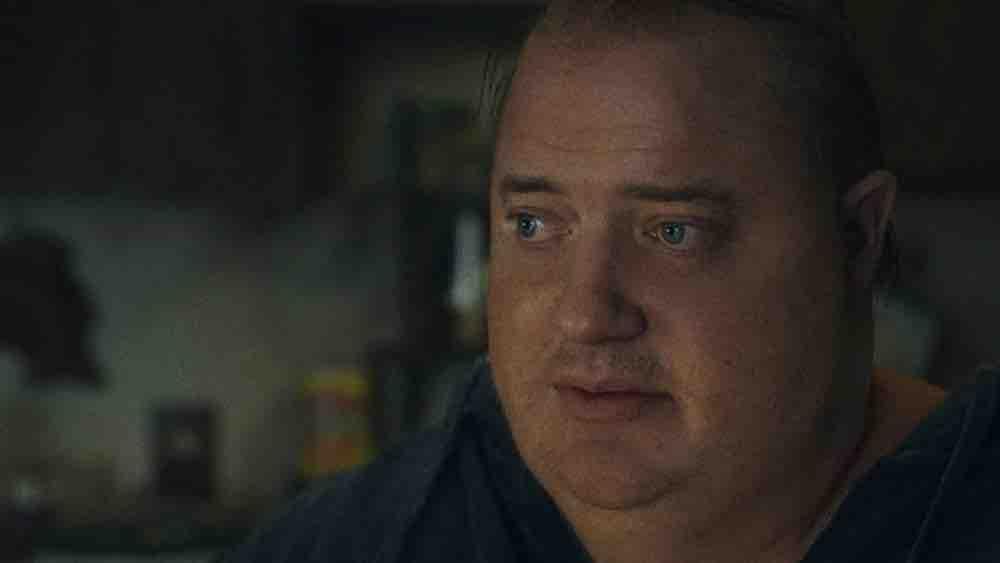
Darren Aronofsky’s The Whale is an intimate chamber piece that trades his usual visual frenzy for a heavy, deliberate quiet. Brendan Fraser delivers a moving, near-mythic performance as Charlie, a reclusive teacher whose final week unfolds in a cramped Idaho apartment that becomes both sanctuary and pressure cooker. Aronofsky stages the film like a moral drama, pressing on themes of guilt, grace, and the stubborn hope for redemption. Some critics found the film’s emotional bluntness and visual austerity overwrought, even manipulative. Yet Fraser’s generosity as a performer—tender, broken, and astonishingly open—anchors the film with undeniable human weight. Within Aronofsky’s nine-film body of work, The Whale lands as one of his most earnest and actor-driven achievements.
8. Caught Stealing (2025)

Caught Stealing is a sharp, bruising detour—a gritty ’98 New York crime caper delivered with his familiar nervous electricity, but without the operatic anguish of his earlier work. Austin Butler anchors the film as Hank Thompson, a washed-up bartender dragged into a violent underworld over a simple cat-sitting favor. Aronofsky and cinematographer Matthew Libatique build a propulsive, grimy atmosphere, mixing menace with dark, almost accidental humor. The film isn’t psychologically volcanic as Requiem or Black Swan, and rather leans on genre clichés, but its swagger, bruised charm, and muscular pacing make it his most playful, accessible film in years—an unexpectedly lively midpoint in his nine-film career.
The film releases Nov 29, 2025 on Netflix.
7. Noah (2014)
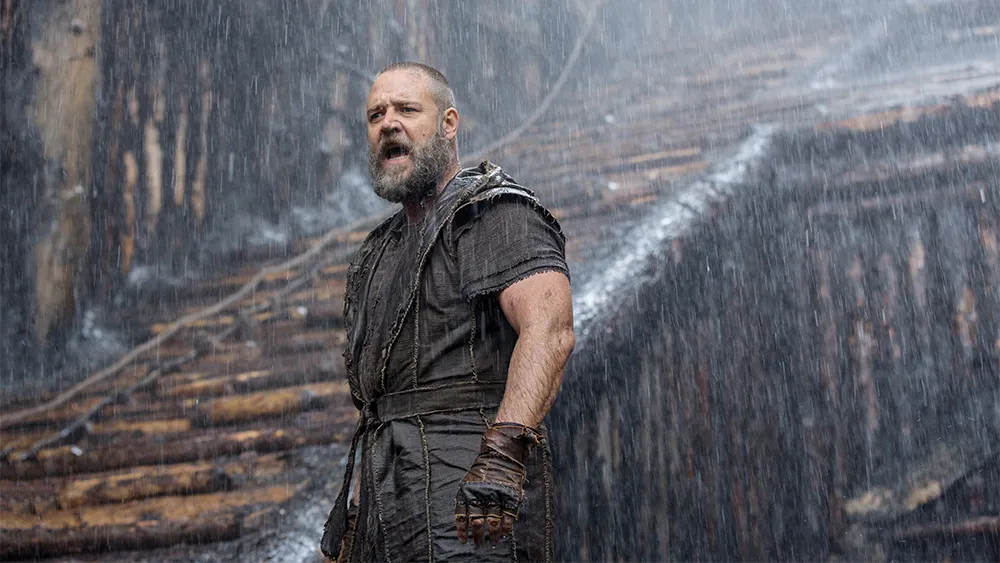
Noah is a $125-million gamble that refuses to behave like a studio biblical epic. We get a stark, imaginative re-reading of the Genesis tale, anchored by Russell Crowe’s flint-hard, haunted performance as a man convinced of a divine mandate and undone by its consequences. Aronofsky’s great strength here is visual invention: the creation sequence, rendered as a rapid-fire time-lapse montage, is among his most thrilling passages, and his calibrated use of color gives each stage of Noah’s moral and spiritual trial a distinct emotional temperature. The film’s latter half drags, burdened by its own severity, and those expecting conventional spectacle may balk. Yet Noah succeeds as a daring attempt to give ancient myth an unsettling, modern cinematic language.
6. The Fountain (2006)
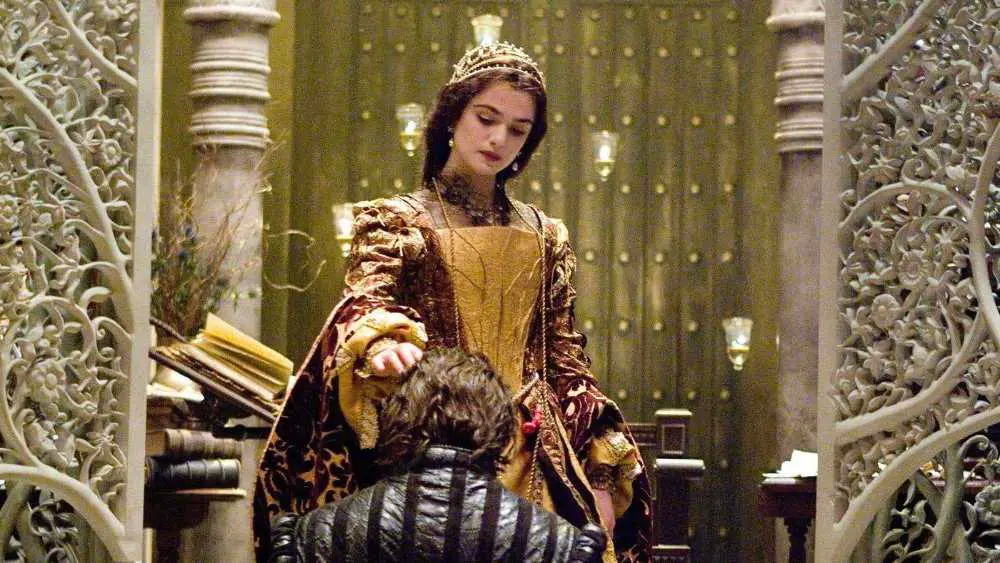
The Fountain is Aronofsky at his most ambitious. A three-stranded narrative that drifts across centuries to contemplate love, mortality, and the human urge to outwit oblivion. Its temporal leaps are less plot mechanics than emotional rhymes. The imagery, at once intimate and mythic, recalls the spiritual reach of 2001: A Space Odyssey, where visual form becomes a philosophical argument.
Hugh Jackman and Rachel Weisz ground the film’s metaphysics with raw, aching performances; their shared longing binds the film’s abstract architecture. What lingers most, though, is Aronofsky’s conviction that stories of life and death can speak to one another across eras, forming a single meditation on what it means to hold on, and what it means to let go.
5. Pi (1998)
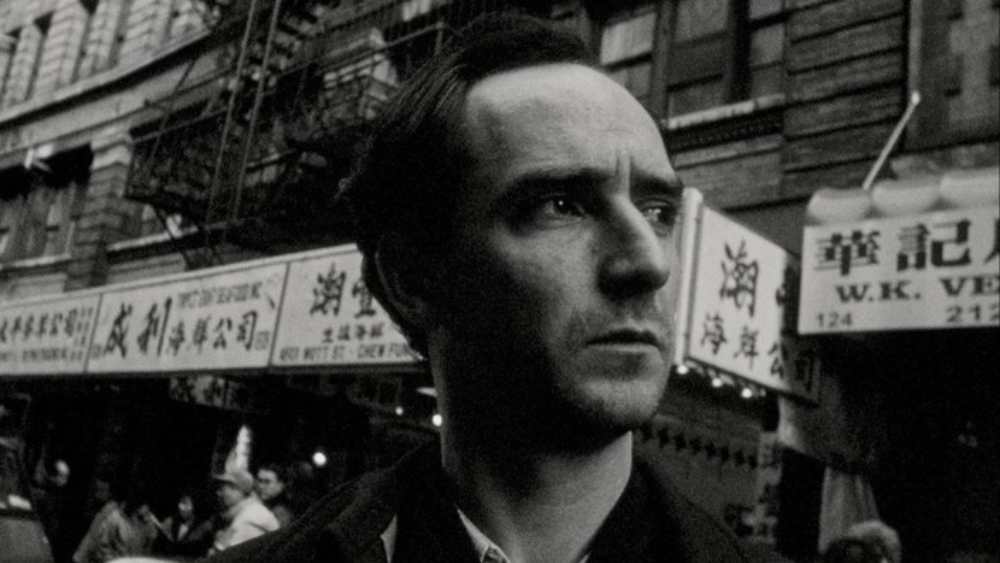
Pi is Aronofsky’s boldest early experiment—a jittery, black-and-white thriller that ties mathematics, mysticism, and human anxiety into one tightly wound story. It follows a reclusive genius convinced that hidden patterns shape everything around us, and the film’s stark visuals make that obsession feel immediate and unsettling. Rooted in real mathematical ideas, Pi shows how the search for meaning can slide into paranoia, until patterns seem to appear everywhere you look. Aronofsky captures the loneliness and pressure of a brilliant, isolated mind without relying on gore or shock; the unease comes from how ordinary moments suddenly feel strange. The result is a tense, imaginative debut that still feels raw, risky, and remarkably alive.
4. Mother! (2017)
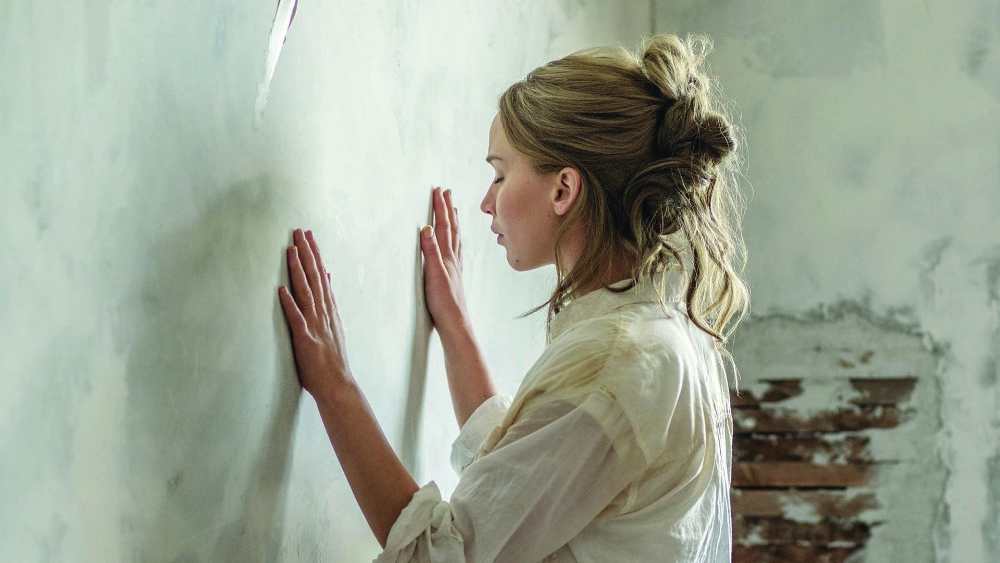
Mother! is Darren Aronofsky’s most polarizing film—a feverish, metaphor-laden horror drama that fans either love or loathe. The story begins like a psychological thriller à la Rosemary’s Baby: a young woman (Jennifer Lawrence) lives with her poet husband (Javier Bardem) in an isolated house she is painstakingly restoring after a fire. He’s mired in writer’s block; she’s trying to build a life.
Their fragile world unravels when a mysterious stranger (Ed Harris) arrives, followed by a flood of uninvited guests who turn the home into a nightmarish battleground. Shot almost entirely from Lawrence’s perspective, the film’s swirling camerawork matches its ambition—mixing biblical allegory, gender politics, and artistic ego. Ultimately, Mother! plays as a ferocious, unsettling critique of the artist-muse dynamic.
3. The Wrestler (2008)
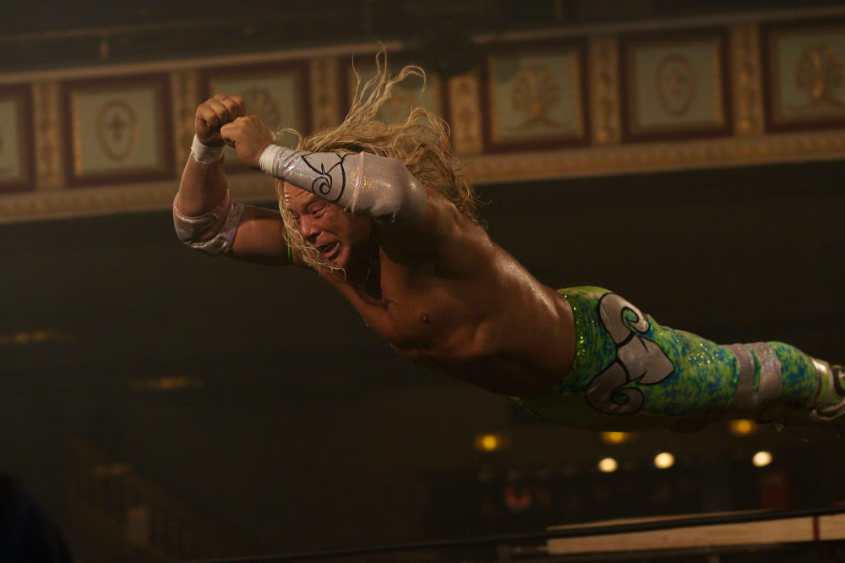
The Wrestler remains one of Darren Aronofsky’s most grounded films, a sports drama stripped of triumphal clichés and anchored instead in the bruised interior life of its protagonist. Mickey Rourke’s performance as Randy Robinson—an aging wrestler whose glory has long faded—became a career resurrection, and for good reason: he gives the role a raw, weathered tenderness. Marisa Tomei and Evan Rachel Wood provide beautifully measured support, especially in the film’s quietly devastating father-daughter scenes, where reconciliation feels both necessary and nearly out of reach. Aronofsky shoots the world around Randy with stark realism, attentive to the lives of people pushing past their limits just to get by. The result is a deeply human portrait of loss, endurance, and the fragile hope of reinvention.
2. Black Swan (2010)
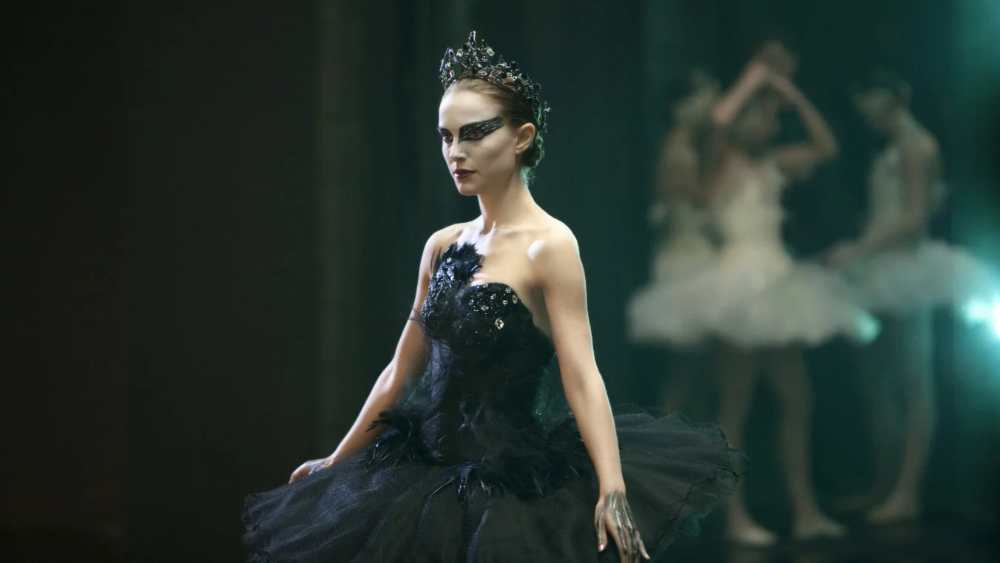
The film is one of the most unsettling and accomplished psychological thrillers of its time, anchored by Natalie Portman’s fierce, disciplined performance as Nina, a ballerina unraveling under the pressure of perfection. Ballet’s rigid formalism is fused with her splintering inner world, blurring the line between reality and hallucination until both feel equally persuasive. The story captures the anxieties that trail ambition – the hunger for approval, the fear of inadequacy, the quiet erosion of self. Each Swan Lake motif adds another layer to her duality, turning the dance sequences into expressions of a mind at war with itself. The result is a modern classic of psychological horror: elegant, feverish, and unnervingly precise.
1. Requiem For a Dream (2000)
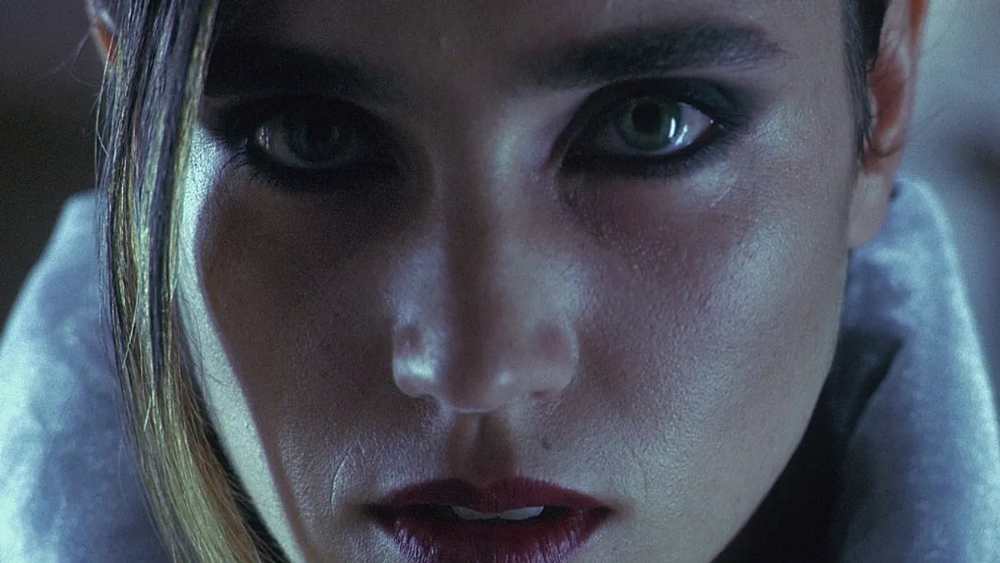
Requiem for a Dream endures because it treats addiction not as spectacle but as a system of delusions that hollow people from the inside out. Aronofsky’s split-screen repetitions and propulsive edits aren’t stylistic flourishes; they map the tightening loops of dependency with almost clinical precision. Ellen Burstyn’s performance anchors the film’s thesis: the American promise of transformation curdles into obsession, whether through amphetamines, heroin, or televised self-help fantasies. The parallel descents of the four protagonists show how addiction reshapes time, turning desire into ritual and ritual into ruin. The film’s final montage, brutal yet earned, exposes the emotional math of self-destruction. Few movies articulate the structure—and seduction—of doom with such harrowing clarity.
Wrapping Up
mother! proved to be Aronofsky’s most controversial work. He still receives hate mails for it, he confessed in an interview.
Looking ahead, Aronofsky isn’t slowing down. His next, titled Adrift, is in pre-production. A horror genre film, Adrift is based on the short story by The Ring novelist Koji Suzuki. Jared Leto reunites with Aronofsky for this one, after Requiem for a Dream.
Aronofsky’s also in early talks to direct Breakthrough, a psychological drama produced by A24 and starring Dwayne Johnson as a charismatic yet manipulative motivator.
(Additional writing by Arun Kumar)