
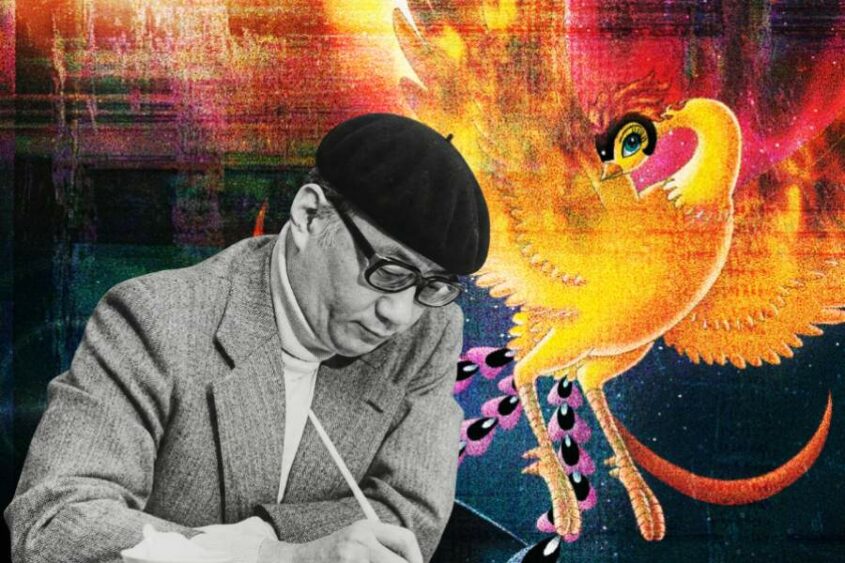
If I said the name Osamu Tezuka, the first title that might come to mind would be Astro Boy (1952). Tezuka’s manga about a robot boy was foundational to Japanese anime. But it’s just one of many comics by Tezuka that made him a legend. From the historical reimagining of the tale of Buddha in 1972 to the medical drama of 1973’s Black Jack, there’s plenty of his manga work to declare Osamu Tezuka the godfather of Japanese animation and comics.
But to me, the one manga that sticks out as his most incredible work is 1954’s Phoenix. The anthology series spans various eras. The only connecting character is the titular bird of fire. She represents rebirth, but also holds the ingredients for immortality in her blood. Immortality becomes a common desire across the many time periods she traverses. You can see the full range within the first two volumes.
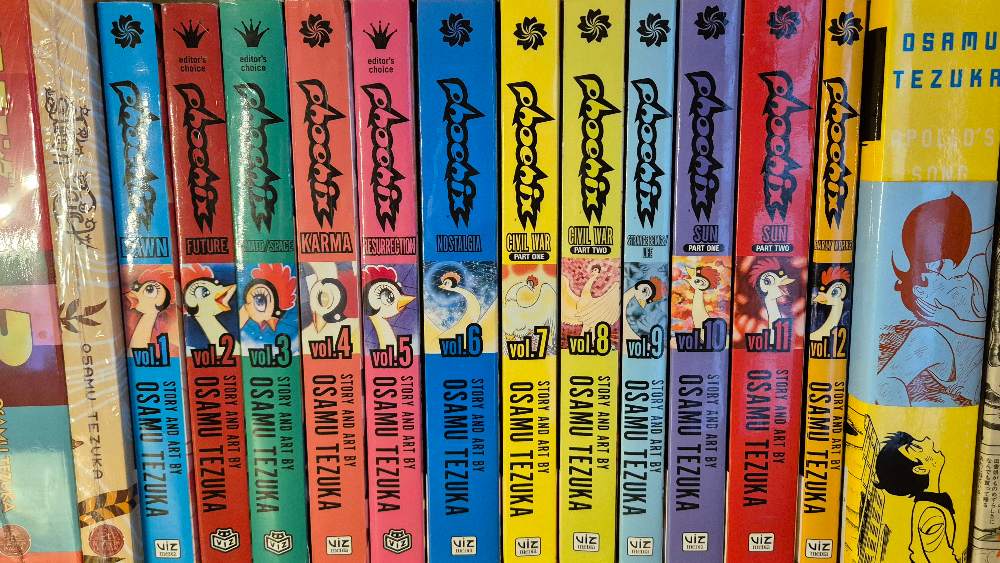
Volume one, the Dawn arc, takes place in the first century of Japan. The powerful Queen Himiko uses all her forces to attain immortality from the Phoenix. But her quest for power leaves many dead, including a vengeful slave, Nagi. The two souls both desire immortality, believing it is something they can fight for. Ultimately, both of them fail, denied a longer life by the bird they cannot kill.
The second volume, Future, speeds all the way to the year 3404. This is a grim future where humanity is doomed to annihilation via nukes. The mad Doctor Saruta attempts to preserve life, but it doesn’t work. It is the end of all things. Yet one man, Masato, attains immortality and lives to see all humans die. He’s lived for millions of years and has watched everything decay. But he also witnesses new life being reborn on the planet. It all builds toward transcendence beyond our mortal coils while highlighting life’s cyclical nature. And that’s only the second volume of a manga that was just getting started.
Watch: The Manga That Changed Me
Deeper Side Of Tezuka
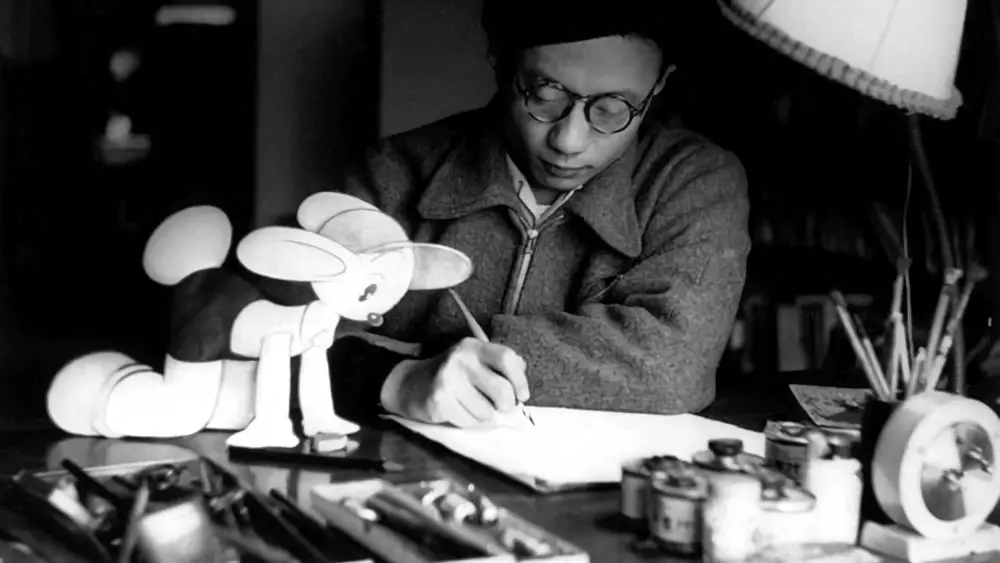
Now, Tezuka’s work hasn’t entirely shied away from darkness.
For as chipper as Astro Boy appears, his origins were tragic. He was a robot created in the image of a dead boy, a dour detail that hasn’t been shirked in the many anime adaptations. There’s plenty of tragedy to be found in Tezuka’s many manga.
Phoenix, however, taps into something far more frightening. Sure, there are some shocking moments of innocent people being murdered and Earth being turned into a barren wasteland devoid of life. But there’s more to it than that.
Every arc in the manga explores the existential terror we all face. We’re all going to die. That’s a tough pill to swallow. But what if we didn’t have to? What if some magical bird could just… fix that? It’s a temptation that the most powerful people would want to seek.
That desire is understandable for someone like Queen Himiko. She doesn’t want to grow old and wither away. She wants her glory days of youth to last forever. But what would she live to see? A future of nuclear war doesn’t sound worth living through. And yet, Tezuka’s series lingers longer on these characters. The nuclear war that wipes out nearly all life on Earth occurs about halfway through the Future arc. The rest of the story is all about Masato watching the world decay, rise from the ashes, die again, and repeat. Watching civilizations die and rise forever should feel hopeless. But the ‘eternal recurrence’ theory popularised by Nietzsche —that everything repeats, dies, returns—isn’t presented as all horror here. There’s something oddly comforting about the perpetual cycle. The lens pulls back far enough to appreciate all that life has to offer, from its gleaming hills to grim valleys.
Even the less futuristic story arc of Dawn harps on the progress of time. Long after Himiko and Nagi die amid conflict, a new generation is raised to maturity. They aspire to something greater than survival and safety. They are inspired by the Phoenix’s encouraging words.
The Phoenix Taking Flight
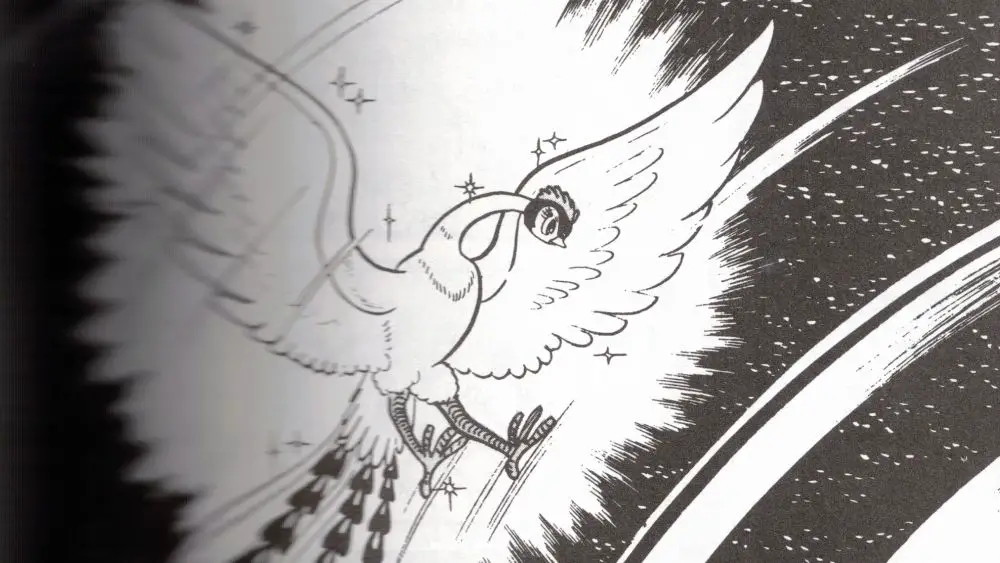
Speaking of which, the Phoenix herself is sparingly used in these stories. Although she is a source of all desires for immortality, the firebird only appears when it is essential to highlight the importance of life and death. The Phoenix isn’t just a wise, personality-free figure of mortality, though. She does judge those who seek her powers. In the Yamato arc, she feels pity towards the musical Oguna, granting him her blood that will grant immortality. Rather than use it for himself, Oguna shares it with those being sacrificed by a corrupt government, doomed to be buried alive. While he won’t live forever, he gives enough life to the executed to drive a tyrant mad.
But the Phoenix can also punish. In the Space arc, she curses Saruta for attempting murder. She dooms him and his descendants to a life of ugliness and wandering through space. But in the Karma arc, the woodcarver Akanemaru is punished in a different way. By demanding the amputation and banishment of the criminal Gao, Akanemaru is not only denied immortality but also a choice in reincarnation. The Phoenix appears to the woodcarver before his death and tells him he will never reincarnate as a human again. He will never again experience the passion for sculpting. This is his punishment.
The Phoenix always comes off like an unpredictable cosmic force. Those who seek her immortal bounty fail, and those who disrespect life are not given pity. She cannot entirely be reasoned with, defied, or murdered. To fight the Phoenix is to fight the tide. With its elongated features and gorgeous eyes, she is a beautiful force of eternal life. This is why it makes sense that the manga series progresses in a non-linear format.
Non-Linear Approach
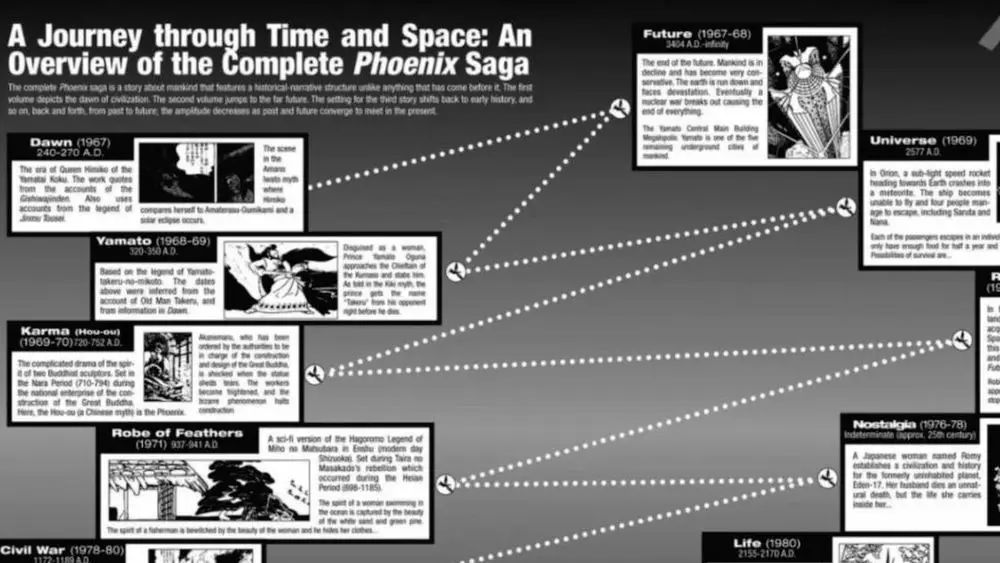
The Phoenix exists throughout time and doesn’t view existence as a straight line. It does get a little confusing. At the end of each volume from Viz, there’s a timeline present to keep track of both the time periods in the manga and when each arc was published. But the jumping around in time is well-suited to crafting a compelling portrait of humanity’s grandeur. This is a story that can’t be told linearly. There’s a lingering sensation of reincarnation in the many generations of Saruta. A connective tissue runs between the stories, as the Future arc circles back to the Dawn arc and the future of the Resurrection arc progresses into the Future arc. There’s even a bleeding of the Future arc into the Karma story, as Gao is given a glimpse of his lineage’s past and future from the Phoenix.
Due to the various settings, it’s hard to pin down Phoenix beyond the broad genre declaration of being a fantasy. Arcs like Dawn and Yamato are easy to write off as historical adventure, given the mixture of real Asian mythology into these narratives. But the arcs for Future, Space, and Resurrection are clearly science fiction. They have all the hallmarks of spaceships, robots, alien planets, and humanity’s extinction in the future. The ambition to make this epic story so vast in its timeframe prevents it from being predictable. It’s why there’s little surprise Tezuka kept working on it for decades.
More To Manga
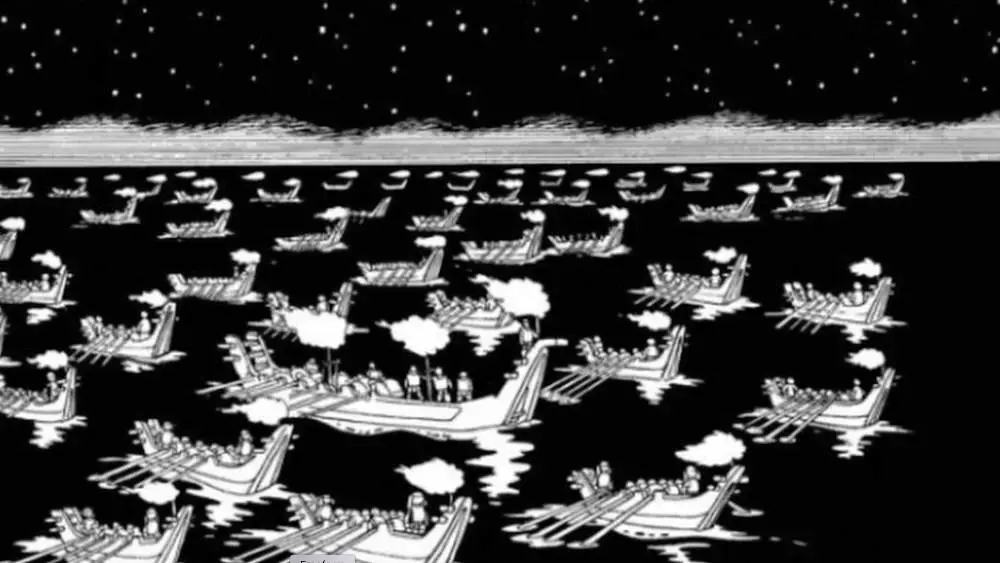
What struck me most about Phoenix was the combination of its deep storytelling and cartoony art style. I grew up reading adult comic books that seemed to have more detail. Deeper themes always felt as though they required more artistic detail than a cartoony appeal.
But here was Tezuka’s exaggerated style of big eyes, round limbs, and bulbous noses used for something so grand. Phoenix isn’t even a departure from his brand of comedy. There are still self-insert depictions of himself, his obligatory cameo of a gourd-like pig, and props not appropriate for the historical eras. There’s an almost jarring effect to how moments like those follow scenes of mass murder and nihilistic insanity. Imagine if Blazing Saddles (1974) went from mocking Westerns to favoring a gritty massacre.
At times, Phoenix felt like I was reading someone’s fan comic, where cute caricatures were abused and brutalized for some cathartic satire.
But it never came off as trying to be subversive. It always read as though Tezuka was using his style to say something more genuine and ambitious. He didn’t want his artwork to be so easily pinned down as adorable designs for safe kids’ stories. Manga as a medium was capable of so much more. Tezuka also saw that in anime. Look at his work on the underrated animated film Cleopatra. He took the historical tale of the real-life and laced it with absurd comedy, s** and violence more fit for adults than children.
Phoenix functions the same way. It doesn’t feel entirely like fantasy, as it draws on real history and mythology. Neither does it entirely feel like a grim cautionary tale of the future, akin to something like The Twilight Zone. It doesn’t even feel like a comedy despite the many offbeat additions of that Tezuka-brand humor.
Pinning down the right age for this material might be difficult, even if the Viz release offers the vague recommendation of teenagers. Personally, I read it in college, and it hit hard. It was a manga series that forced me to look at life in a new way. Life was more than politics, war, and destruction. It’s easy to look at all that, and either desire a way to live through it all or give up on life altogether. But through the manga’s wide scope, Phoenix manages to focus on what makes life worth living in a way that feels less terrifying. It’s not worth living forever if there’s no life left to live. And sometimes that hunt for immortality can be more of a waste of life than we may realize.
Life Never Ends
What’s most tragic about Phoenix is that it was never truly finished. Tezuka had been working on this manga for decades. He started in 1967 and continued the story through 1988. Unfortunately, Tezuka would die from stomach cancer in 1989. The final chapters were still being worked on, but never completed. While the long-running manga was never resolved, it’s fitting that it never found a firm end.
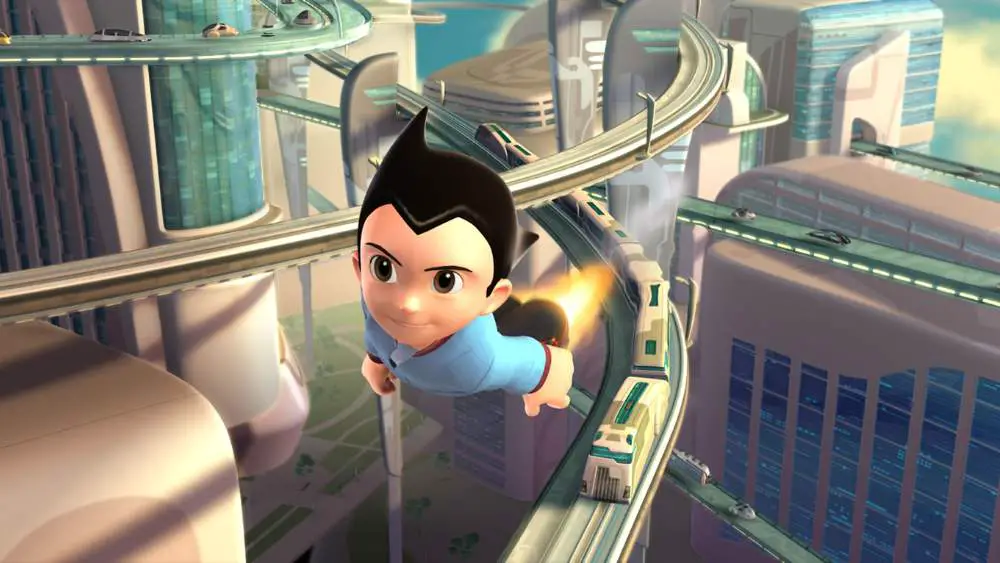
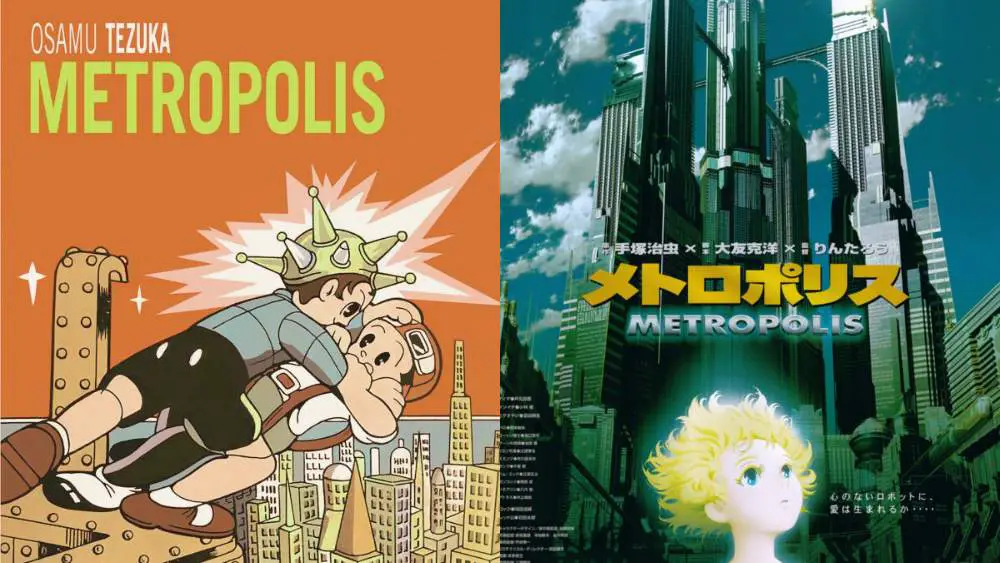
As the Phoenix story implies, life never ends. It will continue long after we depart this world. You need only look to Tezuka himself. After he died, his work lived on. Astro Boy would make the leap to computer animation with a 2009 movie, made for an American audience no less. His 1949 manga, Metropolis, would receive the big-screen treatment in 2001, with faithful designs and great detail from director Rintaro. Even Phoenix was adapted into a live-action film in 1978 and an anime TV series in 2004.
While the anime retooled Tezuka’s designs, it also featured a fitting opening song performed by the Czech Philharmonic Orchestra. Tezuka mentioned that one of the key inspirations for his work was Igor Stravinsky’s music, which makes sense given that Stravinsky’s most revered suite is The Firebird. From that inspiration, something new was born. And through Tezuka’s legendary manga, something more distinct emerged with its rebirth in anime.
Many of Tezuka’s characters will live on, carrying the likes of Astro Boy and Black Jack into the 21st century and beyond. But the Phoenix represents something everlasting, both as a story and in-universe entity of eternal life. There’s so much more to our existence than the era we’re born into or the place we live.
As I read through the many volumes, a comfort took hold. There was an acceptance of life and death as something natural. There was as much terror in fearing the inevitable end of life as there was beauty in accepting the time we’re granted on this planet. I’ve watched plenty of films explore that interplay, from Tree of Life (2011) to Resurrection (2025). But rarely has this theme been so profoundly addressed in manga.
Not through realism, but through a cartoon bird that somehow sees farther than any of us ever will.
