

Ready or Not 2: Here I Come (2026) follows the original Ready or Not (2019), arriving seven years later. Much has changed in the meantime, but the film’s core idea remains intact. Its title builds on the familiar phrase shouted during a game of hide-and-seek, now completed with “here I come,” adding a sense of inevitability to the call.
That same children’s game, much like “Red Light, Green Light” in Squid Game (2021), mutates into something far more unsettling. Play becomes ritual. A ruthless hunt unfolds, centered on a single prey to be found and killed before dawn: a sacrifice meant to appease Mr. Le Bail and the demonic pact binding the Le Domas family, whose massacre Grace, the so-called “bloody bride,” narrowly survived.
While the premise draws from familiar horror territory—Faustian bargains, souls traded for power—the first Ready or Not stood out for its sharp blend of horror, gore, and black comedy. Its strength lay in its tight structure, unfolding over one relentless night in which the innocence of hide-and-seek gave way to something far more sinister. This sequel shifts that balance, subtly redirecting both its themes and narrative focus.

Shortly after surviving the Le Domas’ assault, Grace (Samara Weaving) finds herself pulled into the next level of the game, this time joined by her estranged sister Faith (Kathryn Newton), with whom she has long been out of contact. Grace has one chance: survive, protect her sister, and claim the Place of Honor within a secretive council that pulls the strings of the world. Four rival families are hunting her down, each vying for control. In this game, there can only be one winner.
Social satire once again takes center stage, pushed to grotesque extremes to mock the excesses of the ultra-wealthy. But the real focus here is sisterhood. The story unfolds as a descent into hell, bringing together two women who have never truly managed to understand each other.
In this sense, Ready or Not 2: Here I Come becomes a film centered on female perspectives. The relationship between Grace and Faith anchors the narrative, alongside the contradictory figure of Ursula Danforth, played by Sarah Michelle Gellar. A defining presence in horror throughout the 1990s and early 2000s, Gellar famously portrayed Buffy Summers in Buffy the Vampire Slayer (1997–2003), while also appearing in Scream 2 (1997), I Know What You Did Last Summer (1997), Cruel Intentions (1999), and The Grudge (2004).
She embodied a different kind of genre figure, moving beyond the traditional “Scream Queen” or “Final Girl” archetypes. Symbolically, she passes the torch to Weaving and Newton, both key faces of contemporary horror. The film features a wide range of female characters, each with a distinct role, contributing to a broader and more layered narrative.
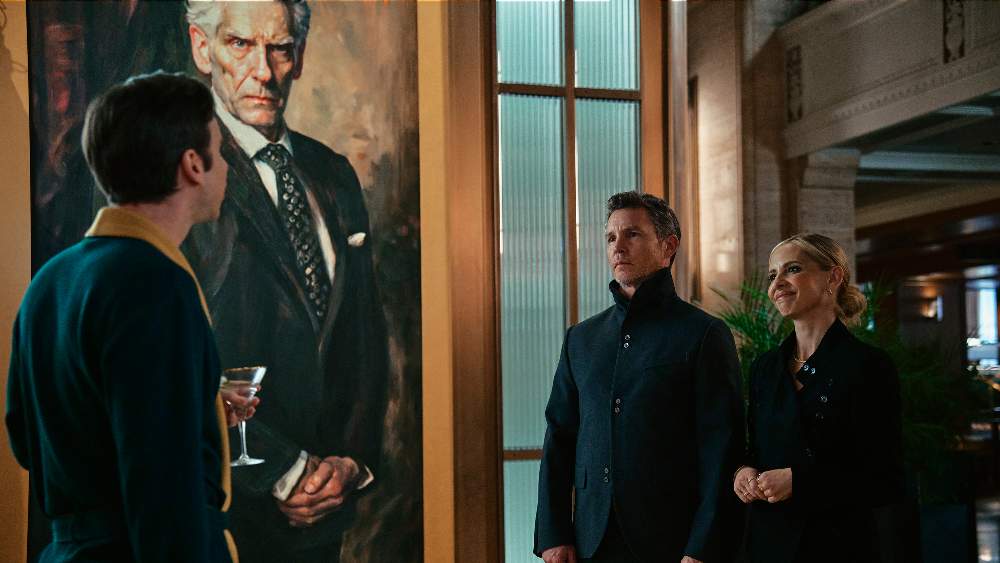
The sequel amplifies the first film’s ideas, leaning further into the grotesque and the hyperbolic. Once again, wealth and its distortions sit at the center, but the Le Domas family is revealed to be just one piece of a much larger system: a powerful council operating behind the scenes. At its top sits the Danforth patriarch, brought to life in a sly cameo by David Cronenberg, a fitting presence that reinforces the film’s ties to the genre.
Horror remains its natural ground. Under the direction of Matt Bettinelli-Olpin and Tyler Gillett, the film ultimately stays rooted in satirical black comedy, blending genres with ease. This approach reflects a broader trend in contemporary cinema, shaped by the postmodern experimentation of the 1990s, when pulp re-emerged as a flexible, hybrid form. The term points both to the cheap paper of early 20th-century magazines and to the idea of pastiche. Its definition famously opened Pulp Fiction (1994), a film that helped redefine genre storytelling and paved the way for a wave of hybrid cinema.
Many recent films follow this path—from the award-winning Sinners to The Bride!, Maggie Gyllenhaal’s attempt to merge gothic horror, sci-fi, gangster, and musical elements, and The Testament of Ann Lee, where Mona Fastvold combines biographical drama with musical tones. Blending genres has become the norm, allowing cinema to explore new creative territory without the weight of convention.
But where Ready or Not 2 falters is its focus. The film becomes a victim of its own excess—too many elements dilute its narrative impact. Repeating the structure of the first film works only in part, sustained largely by the audience’s curiosity to see how Grace makes it out of yet another deadly game.
The expanded cast adds variety, introducing memorable characters—from the lawyer played by Elijah Wood to the Rajan family and the flamboyant El Caido clan, complete with their vengeful would-be bride. These elements are entertaining, but they risk distracting from the film’s central themes.
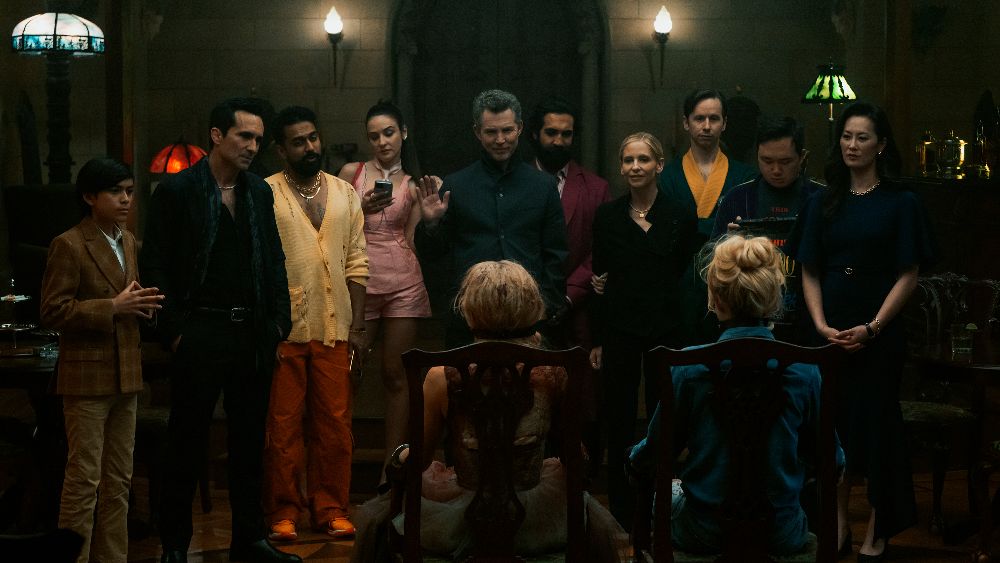
At its core, the movie is less about escalation and more about satire, targeting not only wealth but also conspiracy culture and the anxieties of an increasingly paranoid society. Even Mr. Le Bail fades into the background, becoming little more than a passive observer of human greed. Power proves more compelling than damnation, as characters push themselves to extremes in its pursuit.
Meanwhile, Grace and Faith move toward reconciliation. As they fight to survive, they confront their shared past, finding space for honesty and, ultimately, trust. Trust that is fragile, one that requires setting aside instinct in favor of cooperation.
Ready or Not 2: Here I Come is, in the end, a story of female empowerment and sisterhood. Its night-long descent carries a faintly Dantean echo, where suffering becomes a path toward clarity and survival. At the center of the hunt is not an animal, but a human target, sharpening both its brutality and its symbolic weight.
Less surprising than its predecessor and more predictable in its trajectory, the film still works as an entertaining piece of genre cinema. A guilty pleasure best enjoyed without too much scrutiny—especially for those who see horror, with its mix of grotesque humor and graphic splatter, as a distorted but effective lens on contemporary reality.