At the heart of horror lies a specific territory, a subgenre that has long exerted a disturbing fascination over audiences: body horror. A strand all its own, so prolific and macabre that it destabilizes the viewer’s perception, it reflects on screen the embodiment of many unconscious fears rooted in modern society. The fear of death and bodily decay. Of illness that harms, alters, transforms, and ultimately destroys. And finally, of aging itself, which with its slow advance shatters the illusion of eternal beauty.
Starting from these genre foundations, Ryan Murphy, the prolific serial creator who has shaped contemporary pop culture with cult titles such as Nip/Tuck (2003), Glee (2009), the American Horror Story saga (2011), American Crime Story (2016), Feud (2017), Scream Queens (2015), Pose (2018), and the recent hit Monster (2022) among many others, ventures into new audiovisual territory. Channeling his unmistakable aesthetic—camp, excessive, glossy, and meticulously stylized—into a blend of sci-fi, ’90s-style procedural, investigative crime and, indeed, body horror, Murphy delivers a project like The Beauty (2026). Produced by FX and Hulu, the series consists of eleven episodes and is streaming on Disney+. To tell this story of crimes, transgressions, fatal beauty, and “miraculous” serums, the showrunner and creator of the series, alongside Matt Hodgson, drew inspiration from the comic book The Beauty, written by Jeremy Haun and Jason A. Hurley.
Leading the narrative is an all-star cast including Evan Peters, Anthony Ramos, Jeremy Pope, Ashton Kutcher, and Rebecca Hall, with the participation of Isabella Rossellini, portraying the rapid spread of a lethal virus. A sexually transmitted treatment known as “the Beauty,” which grants users physical attractiveness through aesthetic-based genetic makeup while concealing lethal side effects that begin to overtake their lives. As deaths and public panic escalate, an FBI investigation ruled by partner agents Cooper Madsen and Jordan Bennett (Peters and Hall) takes place, while competing interests converge on the forces behind the drug and the epidemic it sparks.
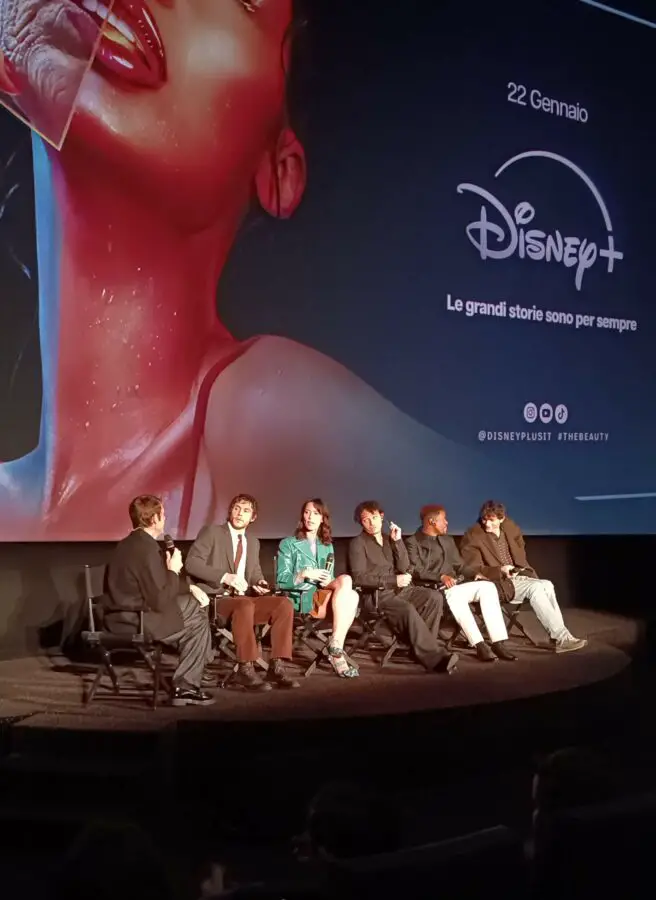
We spoke with the series’ lead actors, starting from their direct involvement in the project: what it feels like to work with Ryan Murphy and step into his creative universe, which uses the framework of the global thriller to engage with themes such as the idea of perfection and the “necessary” sacrifice required to achieve it.
“It’s incredible,” replied Evan Peters. “I mean, it’s an international thriller. When Ryan said we were going to be shooting in Rome and Venice, we really jumped at the opportunity for sure.” “I felt the same way,” commented Rebecca Hall. “It was very exciting. I didn’t actually read the script initially. Ryan pitched me the idea over a breakfast meeting and described it, which was truly one of the most entertaining moments of my career. Because not only was Ryan… He was Ryan Murphy describing to me the most peak and extreme Ryan Murphy storyline that I’d ever heard in my life. This sounds brilliant.”
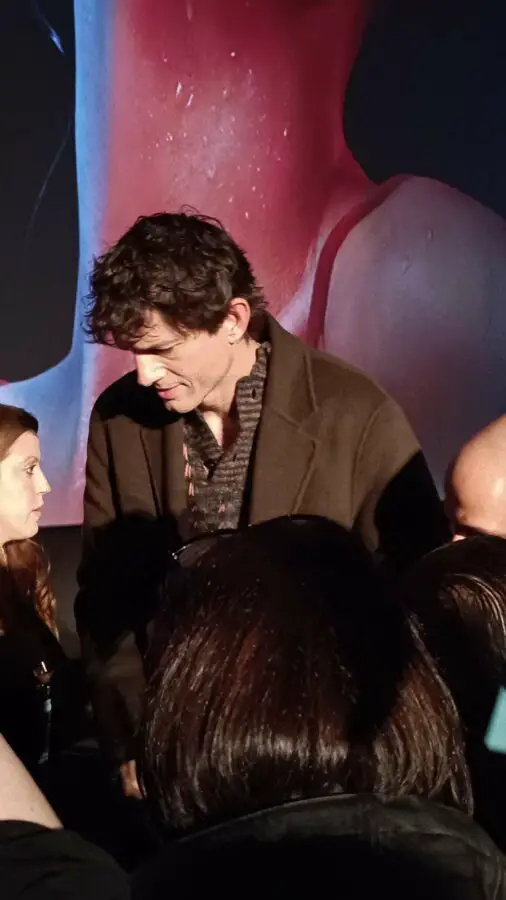
Central to the series’ thematic core is the idea of beauty. It sits at the heart of the narrative arcs that shape the various characters, ultimately forming a portrait of contemporary dynamics: a distorted yet strikingly accurate reflection of our modern social idiosyncrasies. It is a topic deeply embedded in public discourse, and one that inevitably engaged the lead actors as well, all eager to share their perspectives: the first to speak was Ashton Kutcher, who reflected on how beauty has functioned as a double-edged sword throughout his Hollywood career:
How much has beauty burdened my life since I’ve always been considered a handsome man? It’s really embarrassing (laughs) No, it’s an interesting question. I have a twin brother, and my twin brother was born with cerebral palsy. And then when we were 12 years old, he had a heart transplant. You know, we came from the same family, the same place, the same parents. And literally our whole lives, we did the same thing. We’re in the same classes, have the same friends, like everything. And at a certain point, I left my hometown and I started modeling and then got into acting and started having a successful career.
And he came to me one day and he said maybe the most important thing that anybody’s ever said to me. You know, I was becoming more successful, I was like, doing everything I could to help him out and trying to offer him different support in different ways. And he came to me and he said: “you know, every time you feel sorry for me, you make me less. This is the only life that I will ever know”. And for me, it was like this awakening, one thing about the difference between compassion and empathy and feeling sorry for someone. But secondly, it was just sort of a grand realization that we’re all living the only life we will ever know.
I’ve only ever lived in this body. I’ve only ever had one mind. It’s all I ever know. And when I was a kid, I didn’t feel like I was an attractive person because nobody had told me that I was yet. I just felt like a really poor kid that didn’t quite fit in. And then one day when—I was 19 years old—somebody came up to me and said, “hey, you should be a model”. I laughed at them because I thought that they were joking with me. And because I didn’t look like Fabio, do you know him…? (laughs) And that’s what I thought a male model looked like. And then I started working as a model and doing these things and going, oh, I guess getting a little confidence about the way you look over time.
So I think some days we feel beautiful and some days we don’t. And some days, no matter how you look, you can feel really ugly. But I think that the way we look impacts the way the world sees us and what the world thinks about us. And sometimes it can create preconceived notions about who someone is or how someone is or what someone’s capable of. And I think we all live in that because we’re all living the only life we’ve ever known. So maybe we don’t even know how it has impacted us.
The series revolves around the central idea of beauty at any cost, posing the question, “What would you sacrifice for perfection?” a haunting leitmotif that feels relentless, almost pathological, beginning quite literally to infect anyone who allows themselves to be exposed to it.
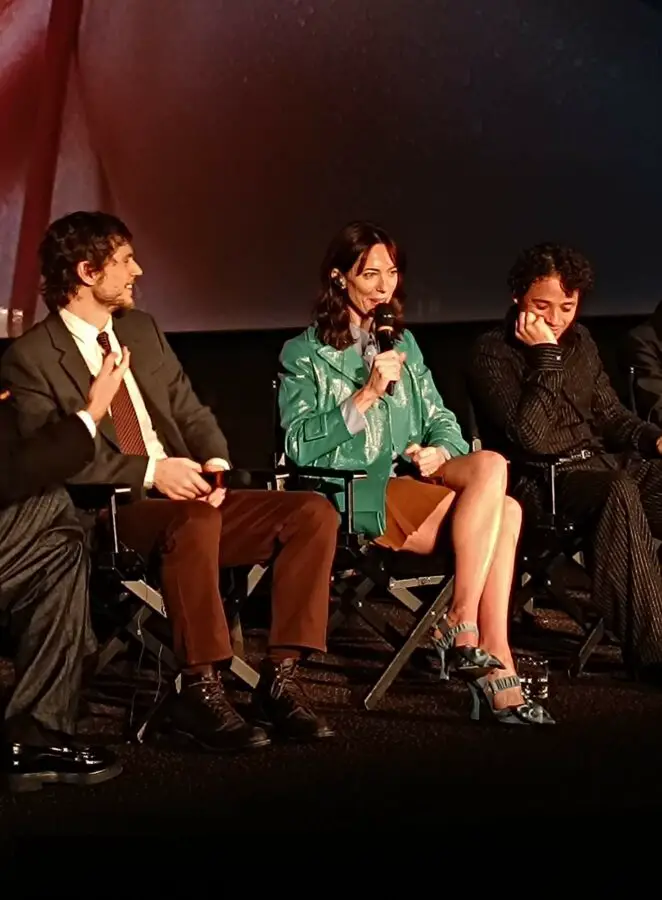
Echoing Kutcher’s reflections, fellow cast members Rebecca Hall, Anthony Ramos, and Jeremy Pope also shared their perspectives on the subject, expanding the conversation and offering insights shaped by their own relationship with the society we inhabit:
Rebecca Hall: I think perfection can be quite boring, actually. So I don’t know. It depends what it means to you.
Ashton Kutcher: I think the proposition of this show is not a fictional proposition. This show is like five minutes in the future. If we look at the world today and we look at what’s available, there’s a drug that you can inject yourself with. It’s GLP-1, those epic Mounjaro, like Wegovy, that will make you lose weight. There are all kinds of different creams and salves and topicals that you can put on your body that will promise you younger skin. There are, you know, there’s the going to the gym and working out and exercising, but there’s also like cosmetic surgeries that you can do, and in fact, people are traveling all around the world. There’s cosmetic tourism now where you can travel to a different country and get the same procedure for less money or whatever it is.
If you just take those things and combine that together with a bit of genetic engineering, the drug already exists. And I think the core question of the show is, where do you live on that spectrum of what’s okay? Why is it socially acceptable to change your teeth and wear braces, but it’s not socially acceptable in some places to get rhinoplasty? And I think what the show challenges is like, where on that myriad of risk do you exist? There could be side effects. There could be things that go wrong. And everybody has a different level of tolerance.
Jeremy Pope: I don’t know how much I would sacrifice, right, personally. I don’t know if, but I think it’s like Rebecca said, beauty is different to everyone. There are people who will buy the most beautiful car or will get the most beautiful apartment or house that they can’t necessarily afford. And there’s just this endless chase for what to like tomorrow. They tell us something is beautiful. I got to have it because I need to stay current and I need to stay relevant. So I need to have that. Even if I can’t afford it, I’ll sacrifice something just to have that because it just keeps me alive. But essentially, it’s just us trying to survive. But then all of a sudden we just find ourselves just trying to, we’re just catching up. That’s all we’re doing is surviving and we’re not actually living.
Rebecca Hall: Also making, constantly, sort of streaming into our psyches that we’re not good enough is more profitable. I think broadly, I’m in favor of everyone doing whatever they need to do to make themselves feel more like themselves. But I think when you’re chasing that from external influences, influences that stand to make money, I think that can get really murky real quick. And it’s hard to hold on to, like, “am I doing this for me or am I doing this because I’m trying to be something else?”
When discussing beauty, unattainable standards, harmful ideals, and filters that distort reality, it becomes impossible not to think about the ongoing debate surrounding AI, particularly its practical use in our everyday lives. And what about in Hollywood? How are AI technologies reshaping the face of our world? An uncomfortable question, perhaps, but one that calls for an open dialogue among the parts:
Jeremy Pope: I think it’s an active question. I don’t know if I have the answer because I think as an artist. I want to believe that there’s space for nuance, that we as an audience, as a community of humans, will still crave nuance, will still crave experiences, going places, not just staying home and seeing it online. Like I want to believe that experiencing something in real time is more thrilling than watching something. So I don’t know when we’re seeing AI, you know, or different technology kind of take precedence and show us flex its capabilities of morphing Ashton’s face on my face and making it look like he said what I said.
And it becoming serious and it leaning into politics and us having to question what is real and what isn’t real. So that margin of truth and false becomes thinner and thinner and thinner. So I don’t know. I think it’s an interesting wild time that we are in currently. And I think I’m curious to see kind of where this leads. But I do want to believe in my heart of hearts that there is still a space for nuance as artists, that we will still crave the ability to meet and greet and talk to and engage with humans. But who’s to say?
Ashton Kutcher: I think it’s just a new medium. To me, there are artists that use AI to create extraordinary outputs. And those people are artists too. There’s always whenever anything new comes along, there’s always so much fear that is embroiled in it. I think that this is a new medium that’s coming. Now, what will it do to beauty standards? We already have face filters on everything that’s online anyway.
I remember 10 years ago, I looked at a company that basically would use AI to smooth out edges on your face. Instagram filters are pseudo-static version of AI augmentation. The film industry has been using AI for a very, very long time. Any CGI that we’re looking at is like effectively a version of AI. And it’s cartooning. And people need to be aware and conscious of the fact that there will be shifts in labor markets as a result of this. But it’s a new medium through which people are expressing themselves. And even some of the AI that’s being created as characters that are living in the wild, the interesting thing that a lot of the AI creators do is actually give them imperfections, intentionally give them imperfections so that they feel more human.
Rebecca Hall: I mean, best case scenario, in a way, is that it makes us remember what being human is and connect to that again and relish in that. And we need that connection. We need to remember what makes us particular.
Where to Watch The Beauty (2026): Hulu (US), JioHotstar (India), Disney+ (Global)