
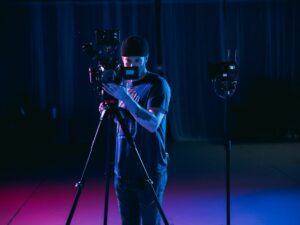
The art of storytelling in film goes beyond accomplished directors and compelling acting. A cinematographer breathes life into a film, deftly controlling what viewers see or don’t see and how the image is presented. Look through any list that details the best films of this era, and it won’t be complete without a few examples of films with truly stunning cinematography.
It takes years of hard work to hone the skills and truly master the craft of cinematography. It has now truly come into its own as a creative field, with respected colleges all across the world offering cinematography courses. So what does cinematography mean in film and what exactly does a cinematographer do on a film set? Let’s break it all down.
Jump To Section:
- What is Cinematography?
- History of Cinematography
- Why is Cinematography Important?
- What Does a Cinematographer do?
- Essential Cinematography Techniques
- Cinematography Equipment Guide
- Famous Cinematographers and Their Signature Styles
- How to Analyze Cinematography in Films
- Learning Cinematography: Education and Resources
- How Much do Cinematographers Earn?
- Cinematography in Animation
- Cinematography Terms Glossary
- Frequently Asked Questions
- Complete Resource Library
What is Cinematography?
The dictionary definition of cinematography is simply the “art of making motion pictures.”
But, that doesn’t quite encompass its variety of elements. Cinematography is the art of storytelling in a visually compelling manner. Anyone with a half-decent camera and a tripod can start shooting, but the artistry of cinematography comes in controlling how the narrative plays out by deciding what the viewer gets to or doesn’t get to see.
Cinematography isn’t just about creating beautiful images. Effective cinematography requires understanding how light, composition, and camera placement evoke emotion and advance narrative.
The cinematographer’s goal is to capture the film’s mood and atmosphere via imagery. They collaborate with the director, actors and even the set and location crew to achieve the desired effect. Cinematography comprises several on-screen visual elements like lighting, framing, camera placement, and camera movement. In the words of the iconic French filmmaker Robert Bresson:
“Cinematography is writing with images in movement and with sounds.”
Whether you’re studying visual storytelling fundamentals or exploring what cinematography means in animation, the core principles remain: light, composition, and movement work together to create meaning.
History of Cinematography
Cinematography began as a technical and creative enterprise in the 1880s, when photographers and filmmakers started combining consecutive images to create the illusion of motion. The “Roundhay Garden Scene,” which dates from 1888 and lasts just 2.11 seconds, is the first surviving motion picture.
However, Louis and Auguste Lumière are often credited with inventing the first motion-picture equipment — a camera and projector — which was publicly demonstrated for the first time in 1895. This established cinema as a formal art with its own aesthetic conventions.
The medium has evolved rapidly since then. Early filmmakers experimented with visual storytelling despite technological limits—no sound until 1929, primitive cameras, crude editing techniques. Motion picture pioneers such as Edwin S. Porter (The Great Train Robbery, 1903) and George Méliès (A Trip to the Moon, 1902) were among the first to grasp its potential, but worked as one-man operations, controlling every aspect of production themselves. It took decades before cinematographers emerged as true creative collaborators whose artistic influence became undeniable.
The evolution continued through the Golden Age of Hollywood, where cinematographers like Gregg Toland (Citizen Kane, 1941) pioneered deep focus photography, and James Wong Howe experimented with low-key lighting and mobile camera techniques. The introduction of color film in the 1930s and 40s added another dimension to the cinematographer’s palette, while the French New Wave of the 1960s challenged conventional visual grammar with handheld cameras and natural lighting.
The digital revolution of the late 1990s and 2000s fundamentally transformed cinematography, making high-quality image capture more accessible while opening new creative possibilities. Today, cinematographers work with everything from IMAX cameras to smartphones, proving that the artistry lies not in the equipment but in the vision behind it.
There is no longer a debate of director vs cinematographer; audiences accept that the film is a product of an equal collaborative process between the two.
Why is Cinematography Important?
Cinematography helps to set the tone of the film’s visual narrative. Certain shots can create a lasting impact on viewers and make them feel like they’re the same part of the action. It’s the responsibility of the cinematographer to ensure that every visual element that appears on screen serves a purpose and helps to narrate the story better.
One of the most iconic examples of groundbreaking cinematography can be seen in 2001: A Space Odyssey, where visual storytelling pushed technological and creative boundaries in ways that continue to influence filmmakers today. The ASC offers a fascinating breakdown of how it was filmed.
More recently, films like Blade Runner 2049 demonstrate how masterful cinematography creates atmosphere and meaning through every frame, while directors like Jordan Peele use cinematography as subtext to communicate themes beyond dialogue.
Cinematography accomplishes several critical functions:
1. Establishes Mood and Tone: Visual choices immediately communicate genre and atmosphere. Dark, high-contrast lighting signals noir or thriller, while soft, warm tones suggest romance or nostalgia.
2. Directs Viewer Attention: Through framing, focus, and composition, cinematographers guide where audiences look and what information they receive, controlling the narrative flow.
3. Reveals Character: Camera angles, proximity, and lighting choices communicate power dynamics, emotional states, and character relationships without a word of dialogue.
4. Creates Visual Continuity: Consistent visual language across a film creates coherence and can signal when something has changed or feels “off” to the audience.
What Does a Cinematographer do?
So, what exactly is the role of a cinematographer? Also known as the director of photography, a cinematographer is entrusted with several duties and responsibilities while on a film set. It is up to them to properly arrange all the elements required in cinematography to get the kind of footage that benefits a film. Some of the primary ones include:
1. Setting up a distinct visual style
One of the most important responsibilities of a cinematographer is determining the visual style and approach of the film. This decision is largely based on the story and the setting of the project. For instance, a gritty thriller might need a dark and moody tone whereas an action film would require a more frenetic feel.
2. Establishing the camera setup
Yet another key responsibility of a cinematographer is establishing the right camera setup for every single shot. This includes picking the right lens, angle, technique, and vantage point to be able to effectively translate the idea from a script onto the screen.
3. Choosing the right lighting elements
A cinematographer can create the right aesthetic to best capture the vision of the director. This requires an understanding of image depth, contrast, and contour. Our guide to 12 film lighting techniques covers the fundamentals, while specific tutorials like shooting in natural light offer practical application.
4. Working together with the director
A cinematographer with a deep understanding of his craft can suggest new ideas and concepts to better visualize what the director has on mind. S/he also understands the kind of visuals that are in line with what the director is looking for and set out to scout for locations that fit the bill.
Once shooting wraps, they work along with the processing lab to ensure that the color is retained and the visuals fit into the vision of the director. Cinematographers are naturally required to be amicable and social as collaborations with creative people are the norm.
5. Working with actors in rehearsals
A cinematographer attends rehearsals with the actors as blocking for a particular scene is bound to evolve with time. This also gives a chance to adjust the cameras in response to a single gesture/action to better capture their performances.
For those interested in pursuing this career, our comprehensive guide on how to become a cinematographer covers education paths, skill development, and industry entry strategies.
Essential Cinematography Techniques
Mastering cinematography requires understanding fundamental techniques that shape how stories are told visually. These techniques work together to create meaning, emotion, and narrative clarity.
Shot Composition and Framing
Composition determines what appears in the frame and how elements are arranged. The rule of thirds, leading lines, and symmetry all guide viewer attention and create visual balance or intentional tension. Understanding how to frame heroes and villains differently communicates character relationships and power dynamics without dialogue.
Camera Angles and Movement
Camera placement profoundly affects how audiences perceive action and character. Dutch angles create disorientation, aerial shots establish scale and geography, while cowboy shots frame action heroes at the perfect height. Camera movement—whether smooth tracking shots, handheld energy, or static observation—shapes the viewer’s relationship to the story.
Lighting Design
Lighting is arguably the cinematographer’s most powerful tool. It shapes mood, directs attention, reveals or conceals information, and creates depth. From natural light techniques to controlled studio setups, understanding how light interacts with subjects and environments is fundamental to visual storytelling.
Depth of Field
Depth of field controls what’s in focus and what’s blurred, directing viewer attention and creating visual separation between subjects and backgrounds. Shallow depth isolates subjects, while deep focus keeps entire scenes sharp, each serving different narrative purposes.
Color and Contrast
Color palettes communicate time period, emotional tone, and thematic content. High contrast creates drama and separation, while low contrast produces softer, more naturalistic imagery. Color grading in post-production further refines the cinematographer’s vision.
To deep dive into specific techniques, explore our complete cinematography techniques collection.
Cinematography Equipment Guide
While artistry matters most, understanding equipment helps cinematographers achieve their vision. Modern cinematography spans everything from professional cinema cameras to smartphones.
Cameras
Cinema cameras range from high-end options like ARRI Alexa and RED to more accessible choices like Blackmagic and Sony’s cinema line. Each offers different sensor sizes, color science, and recording formats. Even iPhones have been used to shoot feature films, proving that vision and technique matter more than gear.
Lenses
Lenses shape how the camera sees the world. Prime lenses offer superior optical quality and wide apertures, while zoom lenses provide flexibility. Anamorphic lenses create the classic widescreen cinematic look with characteristic lens flares and bokeh. Focal length determines field of view and perspective distortion.
Camera Support
Camera rigs and support systems range from tripods and dollies to Steadicams and gimbals. Each creates different movement possibilities. Cranes and jibs enable sweeping vertical movements, while sliders provide smooth lateral tracking.
Lighting Equipment
Lighting kits include key lights, fill lights, and backlights. Options range from traditional tungsten and HMI lights to modern LED panels. Modifiers like softboxes, diffusion, and flags shape and control light quality. Understanding lighting ratios and color temperature is essential.
Grip and Electric
The grip department handles camera support and light modification, while electric manages power distribution and lighting fixtures. C-stands, sandbags, flags, and diffusion materials all contribute to the final image.
Modern cinematographers must also understand digital workflows, color management, and monitoring equipment to ensure their vision translates from camera to final delivery.
Famous Cinematographers and Their Signature Styles
Studying master cinematographers reveals how visual style evolves and influences cinema. Each brings distinctive approaches to light, color, composition, and camera movement.
Roger Deakins, ASC, BSC
Perhaps the most celebrated living cinematographer, Deakins’ work spans from the Coen Brothers’ films to Blade Runner 2049 and 1917. His style emphasizes naturalistic lighting, carefully controlled color palettes, and compositions that serve story above all. His iconic shots demonstrate mastery of both intimate character moments and epic scale.
Emmanuel “Chivo” Lubezki, ASC, AMC
Three-time consecutive Oscar winner for Gravity, Birdman, and The Revenant, Lubezki pioneered new approaches to camera movement and natural light cinematography. His work often features extended takes, immersive camera movement, and reliance on practical and natural light sources.
Greig Fraser, ASC, ACS
Fraser’s recent work on Dune and The Batman showcases his ability to create distinctive visual worlds through color, contrast, and lighting. His cinematography balances beauty with narrative clarity, creating images that feel both painterly and grounded.
Bradford Young, ASC
Young’s work on Arrival, Selma, and Solo demonstrates his mastery of shadow, texture, and underexposure. His cinematography often features rich, warm tones and an almost tactile quality to the image.
Rachel Morrison, ASC
The first woman nominated for the Best Cinematography Oscar (for Mudbound), Morrison brings a distinct eye for naturalism and intimacy. Her work often features handheld camera work and natural lighting that creates authentic, lived-in environments.
Discover more about today’s top cinematographers and how they’re shaping contemporary cinema.
How to Analyze Cinematography in Films
Understanding how to analyze cinematography deepens your appreciation for the craft and levels up your own visual storytelling.
Watch with Purpose
Watch films multiple times: once for story, once focused only on visual elements. Note recurring visual motifs, color palettes, and lighting patterns. Pay attention to how camera placement affects your emotional response.
Consider Context
Every visual choice serves the story. Ask, why this angle? Why this lighting? What does this composition communicate about character relationships or emotional states? How does color support theme?
Study Shot Composition
Analyze how cinematographers use the rule of thirds, leading lines, symmetry, and negative space. Notice what’s included in the frame and what’s excluded. Consider how foreground, middle ground, and background layers create depth.
Examine Lighting
Identify light sources, both practical and added. Notice the quality of light (hard or soft), direction, color temperature, and lighting ratios. How does lighting support mood and atmosphere?
Track Camera Movement
Note when the camera moves and when it remains static. Consider the emotional effect of smooth dolly moves versus handheld energy. Analyze how camera movement reveals information or follows action.
Our film analysis collection offers detailed breakdowns, from The Assassination of Jesse James’ naturalistic cinematography to The Tragedy of Macbeth’s stark, theatrical approach. Study these analyses to understand how master cinematographers craft meaning through imagery.
Learning Cinematography: Education and Resources
Aspiring cinematographers have more learning pathways than ever before, from traditional film schools to online resources and hands-on experience.
Film School vs. Self-Taught
Film schools offer structured curricula, access to professional equipment, and networking opportunities. Top programs include AFI, USC, Chapman, and NFTS in the UK. However, many successful cinematographers are self-taught, learning through practice, online resources, and working their way up through camera departments.
The decision depends on learning style, financial resources, and career goals. Film school provides credentials and connections; self-teaching demands initiative and networking skills.
Essential Skills to Develop
Technical proficiency with cameras, lenses, and lighting equipment
Understanding of exposure, color theory, and composition
Collaboration and communication skills
Problem-solving under pressure
Visual storytelling and narrative structure
Familiarity with post-production workflows
Practical Learning Approaches
Shoot constantly with whatever equipment you have. Study films and analyze cinematography. Read essential cinematography books and follow advice from master cinematographers. Work on student films, music videos, and passion projects. Build relationships with directors, gaffers, and other collaborators.
Online Resources
Beyond film school, numerous online platforms offer cinematography education. MasterClass features Roger Deakins teaching cinematography. YouTube channels from working cinematographers provide tutorials. The American Society of Cinematographers website offers technical resources and case studies.
Our guides on what cinematographers need on set and lessons learned as a cinematographer offer practical insights into the profession.
How Much do Cinematographers Earn?
The Bureau of Labor Statistics reveals annual mean salary for camera operators – television, video, and film was $68,810 in May 2024.
However, earnings vary dramatically based on experience level, project type, and union status. Entry-level camera assistants and operators might earn $30,000-50,000 annually, while established cinematographers on studio features can command $10,000-25,000 per week or more. Union membership through the International Cinematographers Guild (ICG) provides standardized rates and benefits.
Television cinematography offers more consistent work but typically lower per-project fees than features. Commercial work often pays well but requires fast turnarounds. Documentary cinematography varies widely depending on budget and distribution.
Career progression typically moves from camera PA to camera assistant to operator to cinematographer, with each step requiring years of experience and relationship building.
Cinematography in Animation
Animation is a fast-growing field that is filled with endless possibilities regarding what can be depicted on screen. Defined as the art of manipulating drawn or rendered images such that they appear to be moving, animation holds immense promise for the future of cinema. The quality of the cinematography in an animation can make or break it, while framing, editing, and camera movements are all useful tools to enhance the action or develop the plot.
Even technically excellent and experienced animators are frequently disappointed by the cinematography. Every step in animation is identical to live action, only on a computer. The majority of studios employ cameras that function as genuine cameras in 3D space. Certain use physical cameras and track them into 3D space. The obvious distinction is that an animated film has a layout team that works out how to convert 2D storyboards into 3D. Thus, the work of the cinematographer is to figure out how to arrange the elements of the scene — the background, the characters, the setting, light, colours, etc., such that it moves and behaves in a life-like manner in a 3D space. Thus, they work with the animation team in order to create the visual language much like they would in live action across the multiple camera operators.
Read our detailed analysis of cinematography in Pixar movies and what cinematography means in an animated film.
Cinematography Terms Explained
With an infinite number of choices concerning technique and equipment, it’s pertinent that a cinematographer thinks about the type of shot they want to capture. Multiple factors like the angle, light, and relative ease of camera movement will need to be considered before deciding. So, let us run you through the cinematography basics. Here are some of the commonly used cinematography techniques and terminologies:
Shot
The continuous footage or sequence between two edits or cuts. A film can have hundreds or thousands of shots.
Sequences
A series of shots or scenes, edited together in succession with a proper beginning, middle, and end.
Long shot
It’s typically used to show the entire subject from head to toe and their relation to their surroundings. They serve to incorporate a lot of the background into the scene, giving us an idea of the setting. Take Fincher’s use of the long shot towards the end of Fight Club. This visual establishes a budding relationship between the Narrator and Marla, while the world crumbles around them. The shot invites us to participate in the proceedings as a visual bystanders.
Extreme long shot
It’s similar to a long shot, but covers a wider area and the characters need not be visible in the frame. This shot works excellently to establish the location, like in the case of Tarantino’s opening frame in Inglourious Basterds.
Medium long shot
It falls somewhere between a long and close shot and is typically used when there are more than 2 to 3 characters in a frame. Also called a three-quarter shot, it frames the whole subject from the knees up.
Medium shot
This type of shot helps direct the viewer towards the subject, helping us engage with them on a personal level. The subject is framed from the waist up. It is commonly made use of in interviews.
Close up
Here, the subject fills almost the entire frame, helping register facial expressions better. We might be losing information about the surroundings, but that only helps us immerse ourselves in the character better.
Extreme close-up
This shot only frames the person’s facial features, often so much that portions of the subject are cut off by the edges of the frame. You can choose to show specific parts of the body, like the face, or go even closer to show an actor’s eyes. The extreme close-up shot can also be used to frame inanimate objects. Think of a ticking bomb or a bullet shell ricocheting off against an object.
Dutch angle
Often used to convey to the viewer that something’s unsettling or disorienting. Here, the camera has a noticeable tit towards one of the axes. Tom Cruise’s Mission Impossible makes use of Dutch angles excellently. In the restaurant scene, the camera tilts slightly as we realize Ethan Hunt’s now become the target. The same can be said for Inception, which makes use of Dutch angles to create a sense of uncertainty. Learn more in our Dutch angle explainer.
Bird’s eye shot
In this shot, the camera is placed directly above the subject and is mostly used to give viewers an objective perspective. However, this will require a large crane or an overhead rig to able to execute the shot properly. In Silence of Lambs, the overhead shot is used to represent Buffalo Bill’s point of view as he looks down upon his prisoner.
Establishing shot
Used to set up the context for a scene ahead and informs the viewer what kind of action will be taking place. They can also be used to show passage of time like the use of Hogwarts in Harry Potterto convey seasons changing, or movement of the school year.
Tracking shot
A type of shot that involves moving the camera throughout the scene for an extended period of time. They’re often used to follow traveling subjects like Butch when he decides to go back for his watch in Pulp Fiction. It makes us live the action as we’re acutely aware of how high the stakes are. Discover cinema’s best long takes for masterful examples.
High angle shot
A technique where the camera is placed higher up so as to look down on a character or subject. This can help to convey much-needed information about a certain character. Let’s take a look at how James Cameron frames his leading lady in Titanic. Roseis about to jump to her death, weighed down by her inability to control life. We get a high-angle shot as she looks down at the vast ocean below. This makes her look insignificant both on a physical and emotional level.
Low angle shot
Obverse of the high angle shot, wherein the camera here is positioned below the eye-line of the character. This can give the sense that a character is much taller than they look, making them seem powerful in the eyes of a viewer.
Panning
A shot where the camera moves to the left or right of the horizontal axis.
Tilting
A shot where the camera moves up or down on its vertical axis.
Key light
It’s the primary source of light in a scene. The lighting design of a cinematographer is determined by the strength, color, and angle of the key light in question. A key light can be manipulated to create softer lighting or harsher shadows.
Side lighting
The lighting used to illuminate the rest of the areas in a scene.
Backlighting
Where the main source of light is placed behind the subject, serves to separate the subject and the background.
Steadicam
A camera stabilizer that is either hand-held or attached to the camera operator’s body. A Steadicam is used to capture smooth moving shots.
Diegetic sound
Any sound that is produced from the story-world of the film. This includes character dialogue, sounds made by objects, and music emanating from within the film like music playing loudly on someone’s headphones.
Non-diegetic sound
Sound that does not originate from the film’s world and hence cannot be heard by the characters in the film. This is mostly added later in post-production and includes the musical score, sound effects, and voice-overs.
Frequently Asked Questions
What’s the difference between a cinematographer and a videographer?
Cinematographers work on narrative film and television projects, collaborating closely with directors to create a specific visual style that serves the story. They oversee the camera and lighting departments and make artistic decisions about image creation. Videographers typically work on non-narrative content like corporate videos, weddings, or events, often handling camera operation, lighting, and editing themselves with less emphasis on stylized visual storytelling. To dive deeper, read Cinematography Vs Videography: What’s The Difference?
Do I need film school to become a cinematographer?
No, film school isn’t required, but it offers advantages including structured learning, equipment access, and networking opportunities. Many successful cinematographers are self-taught, learning through practice and working their way up through camera departments. The path depends on your learning style, resources, and ability to create opportunities. Either way, building a strong reel and professional relationships is essential. Explore both paths in our guide to becoming a cinematographer.
What camera do professional cinematographers use?
Professional cinematographers use various cameras depending on project needs and budget. Common choices include ARRI Alexa (industry standard for many features), RED cameras (popular for high-resolution capture), Sony Venice (favored for color science), and Blackmagic cameras (budget-friendly yet capable). But camera is just a tool—many acclaimed films have been shot on iPhones. The cinematographer’s vision, lighting, and composition matter far more than the camera.
What’s the difference between cinematography and videography?
Cinematography focuses on narrative storytelling through carefully crafted images, typically for film and scripted television. It involves extensive collaboration with directors, production designers, and other departments to create a cohesive visual style. Videography generally refers to capturing events, corporate content, or documentary footage with less emphasis on stylized lighting and composition. The distinction lies more in approach and intent than equipment.
How long does it take to become a professional cinematographer?
Most cinematographers spend 5-10 years developing skills and building their career before working as directors of photography on significant projects. The typical path involves years as a camera assistant, then camera operator, before moving to cinematographer. However, timelines vary based on talent, opportunities, networking, and the projects you work on. Some cinematographers break through earlier through exceptional work on independent films, while others build steady careers over decades.
What’s the difference between cinematography and filmmaking?
Cinematography is one component of filmmaking—specifically, the visual capture and lighting. Filmmaking encompasses the entire process of creating a film, including writing, directing, producing, editing, sound design, and distribution. A cinematographer specializes in the visual department, while a filmmaker might handle multiple roles. Learn more about this distinction in our cinematography vs filmmaking guide.
Can you learn cinematography online?
Yes, plenty of resources exist for learning cinematography online. Platforms like MasterClass feature courses from Roger Deakins and other masters. YouTube offers countless tutorials from working cinematographers. Online film schools provide structured curricula. But hands-on practice is essential—theory must be applied through actual shooting. Combine online learning with practical experience on student films, music videos, or personal projects.
What makes good cinematography?
Good cinematography serves the story, creating images that communicate meaning beyond dialogue. It involves technical mastery (proper exposure, focus, camera movement) married to artistic vision (composition, lighting, color). Good cinematography is often “invisible”—viewers feel emotions and understand narrative without consciously noticing the camera work. Great cinematography elevates material, creating iconic images that resonate beyond the immediate story. Study essential films with great cinematography to develop your eye.
Conclusion: Mastering the Art of Visual Storytelling
Cinematography remains one of cinema’s most essential crafts—the bridge between script and screen, where stories become visible. Whether you’re studying the masters through Roger Deakins’ iconic work, analyzing contemporary films like The French Dispatch, or developing your own skills with practical tips for beginners, remember that great cinematography always serves the story.
The journey from aspiring cinematographer to master takes time, dedication, and countless hours behind the camera. Study films obsessively. Shoot constantly. Learn from successes and failures. Build relationships with directors and crews. And above all, never stop asking how images can communicate meaning, emotion, and truth.
Whether you pursue formal education or a self-taught path, the fundamentals remain constant: understand light, master composition, serve the story. The tools will continue evolving—from film to digital, from cinema cameras to smartphones—but the cinematographer’s essential task endures: creating images that move audiences and illuminate truth.
Complete Resource Library
Browse our complete collection of cinematography tutorials, analyses, and career guides:
Cinematography Techniques & Fundamentals
- The Dutch Angle Explained
- Aerial Shot Explained: All You Need To Know
- Cowboy Shot Explained (With Examples) And Why It’s Used
- What Is B Roll: Everything You Need To Know
- Anamorphic Lenses Explained: All You Should Know
- What Is Depth Of Field In Film? All You Need To Know
- What Is Mise-en-scène? 7 Films That Are Perfect Illustrations
- 12 Film Lighting Techniques Filmmakers Should Know
- How To Shoot In Natural Light: 13 Tips For Cinematographers
- 12 Types Of Camera Rigs In Film And How They Work
- How A Green Screen Works: Everything You Need To Know
- Framing Characters: How To Frame Heroes And Villains
- How Films Use Color to Tell A Story
Film Cinematography Analysis
- Art of Visual Storytelling: 11 Stunning Film Examples
- ‘The Assassination of Jesse James By The Coward Robert Ford’ Cinematography
- How Jordan Peele Uses Cinematography As Subtext in ‘Nope’
- The Tragedy Of Macbeth (2021) Cinematography
- Euphoria Cinematography: Centering Teenage Experience
- West Side Story Cinematography Analysis
- The French Dispatch Cinematography Analysis
- Blade Runner 2049 Cinematography
- What Does Cinematography Do In An Animated Film: A Study Of Pixar Movies
Best Cinematography Lists
- 22 Must Watch Films For Great Cinematography
- 20 Best Shot Films Of 2022
- 21 Most Beautifully Shot Films Of 2021
- 10 Best Long Takes In Film History
- 20 Coolest Roger Deakins’ Shots
- 21 Iconic Shots Of The 21st Century
- 10 Great Films You Didn’t Know Were Shot On iPhones
Career & Education
- How To Become A Cinematographer: The Ultimate Guide
- 14 Best Cinematography Schools In The World [2024 List]
- Top Things A Cinematographer Needs To Shoot The Perfect Scene
- 15 Things You Learn As A Cinematographer
- 11 Simple But Impactful Tips For Aspiring Cinematographers
- The Best Advice From Seasoned DoPs: 13 Tips From Cinematography Legends
- Cinematography Vs Filmmaking Differences Explained And Why They Matter
- 8 Books On Cinematography That Are Essential Reading
- Cinematography Vs Videography: What’s The Difference?
Cinematographers & Interviews
- Beyond The Frame: In Conversation with Ravi Varman ASC ISC
- Top 15 Cinematographers Who Are Changing The Game
Technology & Equipment
