
In Bologna, beneath its ancient porticoes where the voices of past and present still murmur, it’s easy to stumble upon an old wooden door, heavy and scarred, with dark wrought-iron hinges. Hidden between the rush of the crowd and the dust of a construction site, it opens onto a journey through myth, history, archetype, literature, and pop culture. A journey haunted by whispering voices that confess unspeakable horrors, all asking a single question: why are we so addicted to monsters?
Humans and monsters are but mirror images—two faces of the same essence. The word ‘monster,’ from the Latin ‘monstrum,’ refers to something extraordinary, outside the natural order. The vampire embodies this ambiguity perfectly: human in appearance but monstrous in nature. It reflects our deepest fears and unspoken desires—the dream of immortality, the thrill of transgression, the pull of forbidden seduction, the magnetic mix of beauty and danger. The monster fascinates us because it’s nothing more than an amplified, distorted version of ourselves.
The exhibition “Vampiri” (organized by Alterego Experience at the Bologna’s Palazzo Pallavicini last month), reignited my curiosity. Seven rooms, each a multi-sensory dive, explored the history, mythology, and pop-cultural echoes of horror’s most iconic revenants. The exhibition drew connections between these undead legends and other archetypes that have transcended literature to colonize our dreams, shaping collective imagination.
More than ever, we’re witnessing a resurgence of the gothic and the horrific across the cultural landscape—not only in publishing, where “neo-gothic” tendencies are flourishing alongside major literary comebacks, but especially in cinema and television, where monsters have reclaimed their ground. They have become symbols—iconoclastic simulacra—of our fears and fragilities. Of the vulnerabilities we struggle to accept, yet must confront, to reveal who we truly are.
A semantic shift is underway. Once, the monster embodied the outsider, the deviant figure whose difference threatened social order. Now, it represents the beautiful and uncanny—a seductive darkness that speaks to the depths of our unconscious selves. Series like Welcome to Derry, tracing a red thread through Stephen King’s vast horror multiverse, and major recent films that brought audiences back to theaters, have proven that horror is not dead. It’s alive and in good shape, walking beside us as a (distorted) lens for our social and emotional evolution.
Of Archetypes and the Long Shadows of History

Back in the corridors of Palazzo Pallavicini, we wandered between an immersive room dedicated to the real Vlad III, the Impaler, Prince of Wallachia, and a meticulous reconstruction of Villa Diodati (Switzerland), the birthplace of Frankenstein and The Vampyre. The latter, the central figure of the exhibition, has always displayed an extraordinary talent—the ability to anticipate historical shifts, to sense the long shadows of history before they stretch far enough to engulf everything.
Since 1732—the so-called “Year of the Vampire,” marked by waves of plague and outbreak hysteria across the Balkans—this myth has returned cyclically during times of crisis: from the horrors of World War I and the Great Depression to the AIDS epidemic and the addiction crises of later decades. The vampire has always inhaled the scent of impending tragedy, embodying our collective anxieties, a harbinger of death and disease, just like the blood it feeds on—capable of infection through the same intimate act. Drifting between literature, tv, and cinema, the archetype has once again seeped into our cultural bloodstream, adapting its myth to the limits and possibilities of modern storytelling, crossing oceans of time without losing an ounce of its hypnotic allure.
The “season of monsters” opened with Robert Eggers’ Nosferatu—a modern master of horror venturing, for the first time, into adaptation rather than original creation (as partially seen in The Northman). Eggers approaches the cult material of F. W. Murnau’s 1920s masterpiece—and Werner Herzog’s later remake—with reverence and reinvention. The result reframes horror through the prism of modernity, giving prominence to the female protagonist, Ellen, who steps into the light as a symbol of rediscovered femininity. She embodies liberation from Victorian constraint—an awakening through the unconscious and through fear itself—where terror and desire dance a dark pas de deux, electrified by unspoken cravings and the hunger for social redemption.
Fear and Folklore
With his unmistakable, etiological style—always tracing the origins of myths to reflect on the present through the lens of the past—Robert Eggers is once again ready to apply his distinctive formula. His next project, the highly anticipated Werwulf, resurrects the myth of the werewolf, stripping away its pop(ular) trappings to return to its historiographical roots, to the very dawn of the legend.
Set in 13th-century England and scheduled for December 2026 release, the film already distances itself from Hollywood’s traditional mythology of the lycanthrope, returning instead to the primal archetype. Eggers evokes a gothic terror born not in foggy British moors but in the cradle of ancient Germany. Long before ghostly apparitions haunted the English countryside or tales of terror were told by candlelight over tea, the Gothic had already taken root in Central and Northern European folklore—a cultural wunderkammer of wonder and horror shaped by macabre fairy tales and oral traditions. It was in the Bavarian villages and the depths of the Black Forest that the werewolf first began to walk, recorded in chronicles and eyewitness accounts that blurred the lines between history and legend. Only after reaching Hollywood did this unique corpus of stories find structure in modern mythology, reflecting the horrors witnessed—and perpetuated—during World War II.
When The Wolf Man first appeared under the Universal banner in 1941, the world was in flames. Europe was being consumed by war, and many filmmakers—forced into exile—reinvented themselves under the California sun, in that golden suburb known as the Mecca of entertainment. In the story of Lawrence Stewart Talbot, screenwriter Curt Siodmak embedded personal echoes of his own experience: persecution, displacement, faith, and fear. The werewolf’s curse became a distorted mirror of reality—like the warped reflections in a carnival funhouse—offering a monstrous reinterpretation of history. Once again, the “monster” ceased to be the corrupting other, the misfit who threatens the comfort of normality, and became instead the persecuted voice of the marginalized—a blank canvas upon which collective fears and unconscious anxieties could be projected.
Retelling the Narrative
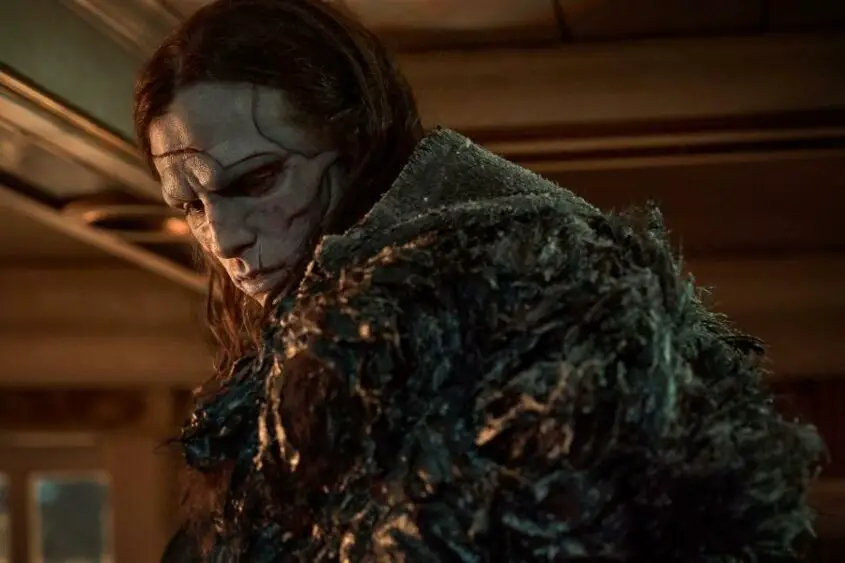
The werewolf—an embodiment of horrors tied to war and repression—is now returning to the screen just as the world trembles again under the shadow of conflict and death; and alongside him comes the vampire.
Whether Nosferatu, Dracula, or the tormented, post-romantic creatures of Anne Rice’s Interview with the Vampire (now revived in a Netflix adaptation), the vampire is reclaiming the spotlight years after his last cinematic incarnations—whether the glamorized versions of Twilight or the feral beasts of 30 Days of Night.
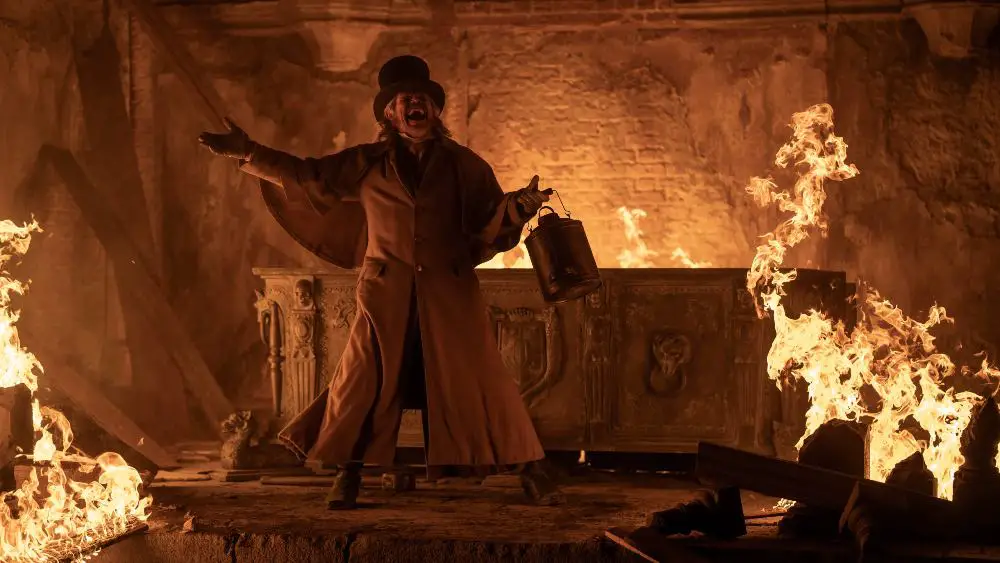
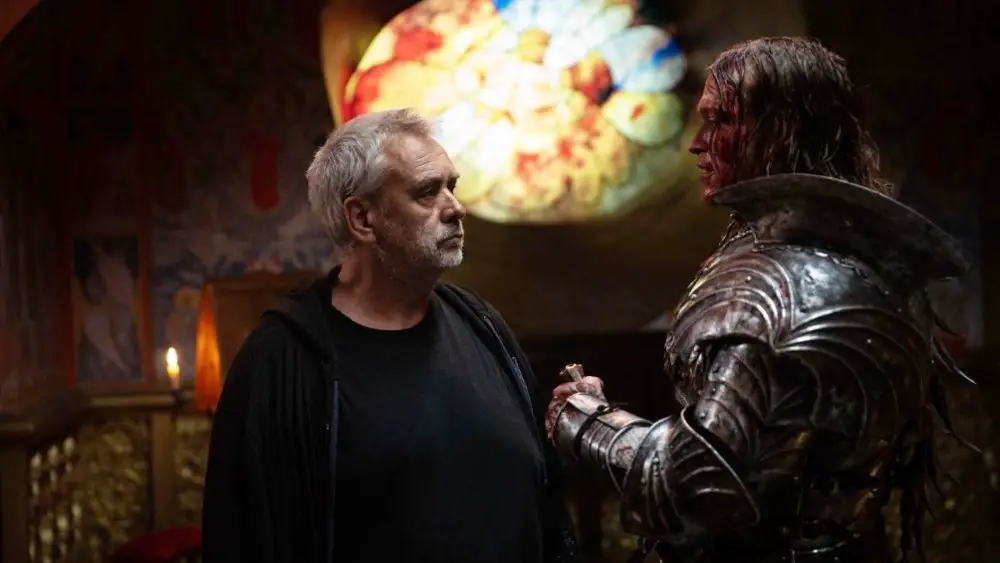
Nosferatu opened the 2025 “season of monsters,” and Luc Besson quickly seized the moment. His Dracula is no longer the menacing revenant to be feared, the embodiment of sin and contagion, but a pale, romantic nobleman condemned to the cruelest punishment imaginable: eternal life in search of a lost love. Blending history, myth, and pop sensibility in his trademark French mélange, Besson reinterprets Vlad III the Impaler through the lens of Bram Stoker and Francis Ford Coppola, crafting a version both contradictory and proudly kitsch. The “ultimate vampire” has transcended his name to become an idea—romantic and decadent, dangerous yet irresistibly alluring, a reflection of our fascination with forbidden terror.
Besson draws from what Stephen King once called “the Hook story,” transforming myth into archetype and archetype back into myth. By contaminating genres and favoring hybrid storytelling over Eggers’ historical purism, he turns the Transylvanian nobleman into a forbidden desire, set against an unexpected backdrop: a Belle Époque Paris more decadent than gothic. To change setting, to act upon space and time, is not merely to transpose a story—it is to reshape its anatomy and rewrite its soul.
Alabaster Statues and Broken Dreams
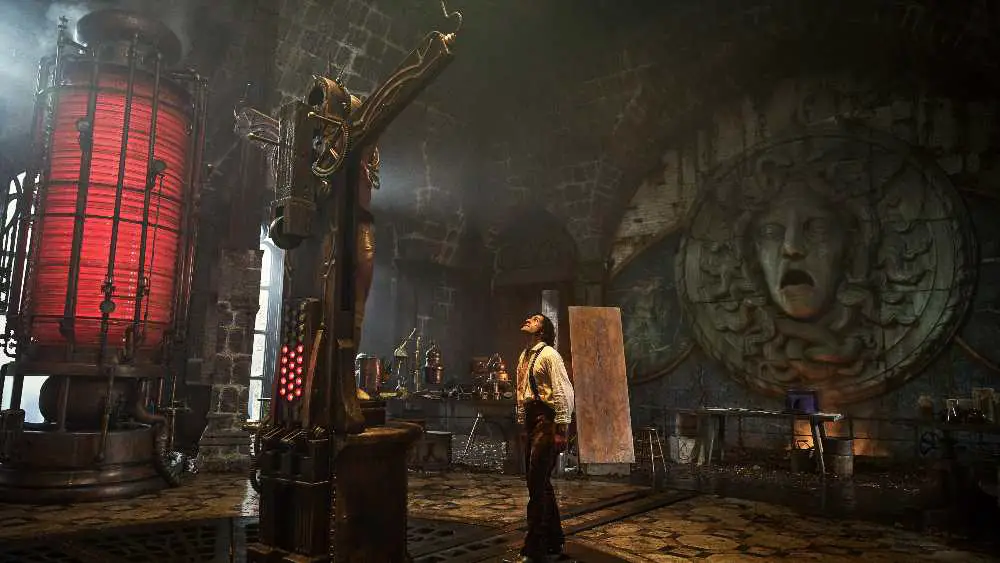
A similar operation to the one carried out by Guillermo del Toro with his Frankenstein: no longer Switzerland in 1818 or 1831, but the somber Scotland of 1856 and the gothic England of the moors, swept by endless winds that sound like whispers, like ghostly voices wandering through untamed nature. A Brontë-esque license, of course, that also nods to the return of the Yorkshire sisters’ imagery to the silver screen through Emerald Fennell’s upcoming adaptation of Wuthering Heights, due to arrive in theaters just in time for Valentine’s Day.
The fil rouge connecting the two films, beyond atmosphere and a shared collective “canon” inhabiting the audience’s imagination, is Jacob Elordi, now an almost involuntary emblem of contemporary neo-gothic, firmly rooted in literary and cinematic tradition. Frankenstein has won over both critics and audiences, launching its personal race toward awards season while relaunching the myth and redefining its boundaries.
Painful as it is to admit, in recent years the confusion between Victor Frankenstein and his Creature had become the involuntary symbol of a broader communicative short circuit, one that desperately needed new lifeblood, or a new spark to restore order. If del Toro’s adaptation is openly unfaithful and deeply personal in certain respects, the result of a project nurtured for over thirty years, in other ways it proves profoundly faithful to the layered, composite spirit of Mary Shelley’s novel, capturing the complexity and intent of an author still in need of genuine rediscovery.
The Creature, a broken and ruined alabaster statue, a collage of bodies and memories, the faded remnant of previous lives resurrected through an act against nature, the offspring of a traumatized man’s boundless hybris, the same man who sought to outplay both life and death, has long functioned as a blank canvas. Quite literally a body of “flesh and celluloid”, as I argued in a previous article, onto which each viewer can project a fragment of themselves, eventually becoming part of the very monstrous collage assembled by a man who dared challenge divine law.
For James Whale, who first brought the Creature to the screen in 1932, it became a vessel for unspoken truths and silences, a metaphor for his openly acknowledged yet painfully lived homosexuality in Hollywood’s Golden Age. Later, as the franchise grew and the Creature took center stage alongside other Universal monsters such as the Wolf Man and Dracula—all three eventually sharing the screen with Abbott and Costello—Frankenstein’s monster gradually transformed into the embodiment of adolescent anxiety, of youthful alienation during a delicate transition not only about age but of history itself. With the 1950s approaching, and cultural archetypes like Elvis, James Dean’s Rebel Without a Cause, and Marlon Brando’s wild charisma dominating the scene, the Creature shifted from nightmare figure to misunderstood idol.
Del Toro underscores this evolution by granting the Creature the fractured beauty of a shattered statue, mirroring the broken dreams of perfection and glory harbored by its creator. He endows it with a naïve sensitivity, the innocence and unpredictable ferocity of animals, suspended in an eternal conflict between instinct and morality, reason and emotion.
The Monster as the Archetype of the Minority
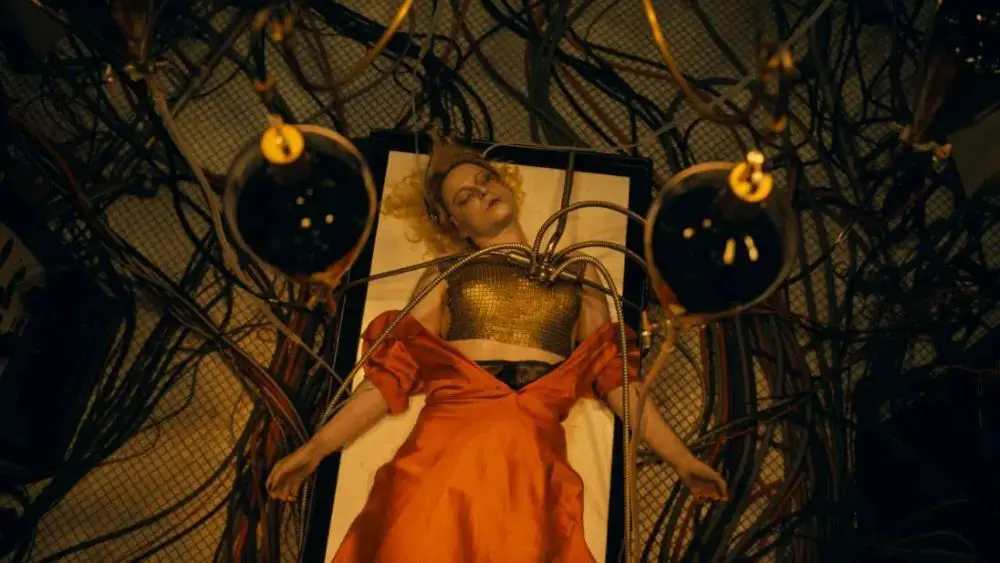
What, then, will Maggie Gyllenhaal do with this Creature in 2026, when she raises the stakes by finally giving it the “famous” Bride, the face of Christian Bale, and the rhythm of a musical infused with the codes of classic gangster cinema? Anticipation is high for The Bride!, a project that already appears as a creative hybrid of genres and influences, a deliberately impure canon that flirts with the very notion of pulp and pastiche, dismantling the myth and rewriting it from the ground up. Here, too, the narrative places the Bride at the center. Already brought to the screen by Universal in 1935, she now sheds the connotation of “wife” and instead becomes “bride” in the fullest sense: a partner in crime, embarking on a journey into the feminine and its nuances, without neglecting the unconscious and the un-confessable, much as Eggers did with Nosferatu.
Once again, the monster becomes the archetype of the minority, now more than ever. It stands as the ultimate symbol of those who, throughout history, have struggled to claim their voice and assert the legitimacy of their presence. We remain fascinated, even dependent on these figures, for many reasons. But above all, because they function as blank canvases upon which we project, just as in a movie theater, the shadows of our restless imagination. A perpetual movement of thought seeking representation beyond the confines of the screen.
And then there is another truth: monsters embody terror. And terror, as has been repeatedly stated, is inextricably linked to pleasure. Horror and pleasure move together, shaping and contaminating one another, crossing from one imaginary into the next, colonizing and redefining it, never leaving the audience untouched.
The Season of Monsters

In this intricate game of echoes, quotations, and contaminations, there must also be space for a desacralizing gaze. One that rewrites these archetypes and ultimately empties them of their inherited meaning, using them instead as symbols pointing “elsewhere”: toward contemporary contradictions, toward the commodification of myth itself, toward the logic of late capitalism. This is precisely the task undertaken by Romanian filmmaker Radu Jude, who has reclaimed one of the founding myths of his own cultural territory and reshaped it into something radically different. A grotesque social satire that speaks directly about us and places us uncomfortably at the center of the narrative, deploying Dracula, filtered through wildly divergent genre codes, as a narrative device.
The result is an anarchic film, an opera buffa of sorts. One that mocks social oxymorons and exposing a society increasingly obsessed with the relationship between commodity and capital, supply and consumption. A world in which even Dracula has lost his unsettling aura, reduced to a collective trigger, a hollow signifier. And if these are the premises, what should we expect from Jude’s upcoming Frankenstein, which seems poised to even appropriate the conventions of the spy story, entrusting Sebastian Stan with the task of dismantling yet another archetype?
For now, all that remains is to wait. To welcome a new year promising yet another season of monsters: creative, anarchic, gothic, and ominous. A season populated by figures who inhabit the haunted houses of our imagination, unlocking fears older than memory. Carriers of immortal archetypes, just like the terror they generate and the fascination they continue to exert on us.